
Outlet Sparks When Plugging Something In: Chattanooga Fixes
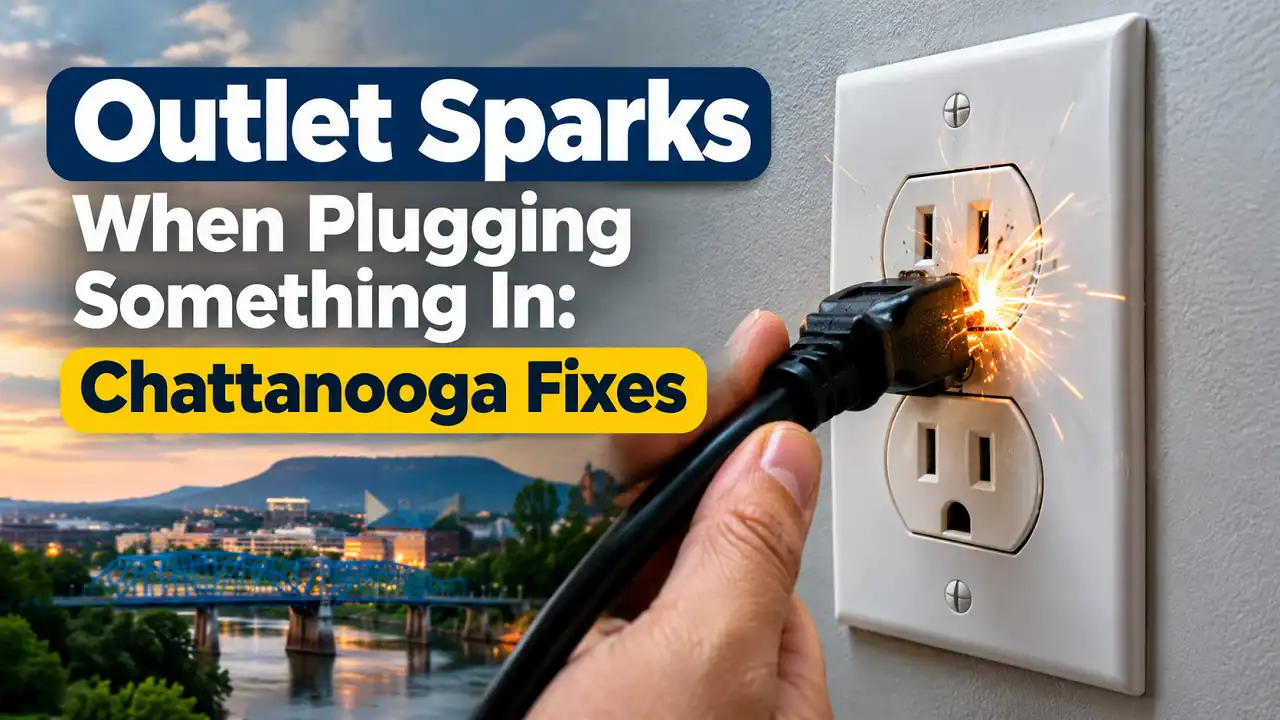
A blue flash at the wall plate catches your eye fast, and it should. When an outlet sparks when plugging something in, your home is giving you information about the receptacle, the wiring behind it, or the device in your hand. Most of the time, that spark is tiny and harmless. Some of the time, it is the first visible sign of arcing, which creates heat inside your walls. The difference between those two outcomes is what this article helps you sort out.
At Electrician Chattanooga TN, our Gov Certified electricians answer these calls 7 days a week. We see sparking outlets in 100-year-old bungalows, 1970s ranch homes, and brand-new builds alike. Below, you’ll learn how to read a spark by its color, size, and sound, what causes it, what it costs to fix, and when to stop using the outlet entirely.
Key Takeaways
- Turn the device off before you plug it in. If the spark disappears, you most likely saw normal inrush current, not a wiring fault.
- Yellow, orange, or loud sparks are never normal. Shut off the breaker for that outlet and leave it off until an electrician inspects it.
- A plug that slides out easily is a warning sign. Worn contact tension is one of the most common causes of repeat sparking, and a new outlet often costs less than a single service call for fire damage.
Why a Sparking Outlet Matters for Your Home
A sparking outlet matters because arcing generates heat, and heat breaks down insulation.
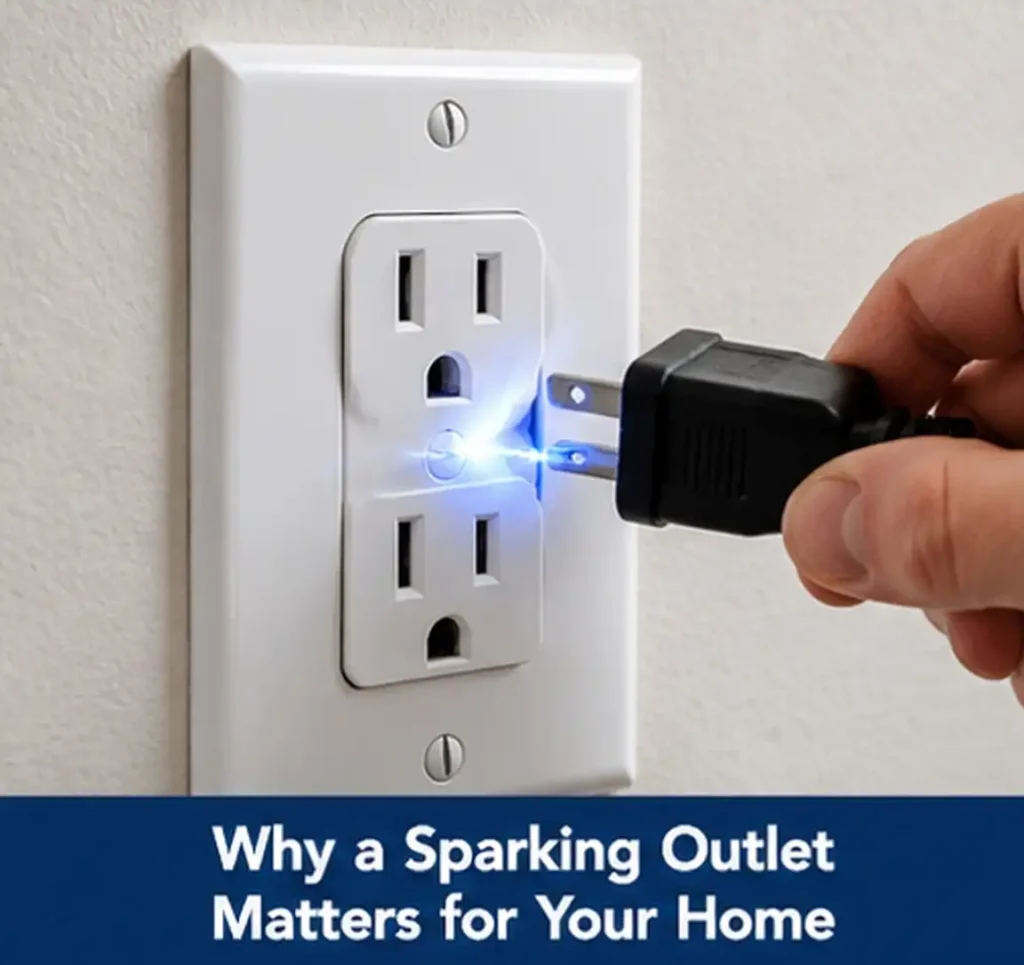
Electricity jumps across a gap whenever two conductors are close but not fully connected. That jump is an arc. A brief arc at the moment of contact is expected. A repeated arc inside a loose terminal can reach temperatures high enough to char wire insulation, melt plastic housings, and ignite wood framing.
The National Fire Protection Association tracks home electrical fires each year, and electrical distribution equipment, including outlets and wiring, ranks among the leading causes. That is why a pattern of sparking deserves more attention than a single flash.
What This Means in Chattanooga Homes
Our certified electricians frequently see this in local properties for three regional reasons:
- Older housing stock: Neighborhoods like North Chattanooga, St. Elmo, and Highland Park contain homes with original two-prong outlets, cloth-insulated wiring, and decades of worn contacts.
- Humidity and heat: If you’ve spent a summer in Chattanooga, you know how damp basements and muggy garages get. Condensation inside outlet boxes speeds up corrosion on terminals.
- Storm activity: Spring and summer storms bring power surges that weaken outlet components over time.
Start by observing the spark closely, because its appearance tells you most of what you need to know.
Normal vs. Dangerous Sparks: How to Tell the Difference
A normal spark is small, blue, quick, and silent. It happens because current starts flowing the instant the prongs touch the contacts. A dangerous spark is large, yellow or orange, loud, or leaves a mark. If an outlet sparks when plugging something in and you see any of those red flags, treat it as a fault.
Spark Diagnosis Table
| What You See or Hear | Likely Cause | Risk Level | What to Do |
|---|---|---|---|
| Tiny blue spark, instant, silent | Normal inrush current | Low | Switch the device off before plugging in |
| Blue spark every time, any device | Worn contacts or loose terminal | Moderate | Schedule an outlet inspection |
| Yellow or orange spark | Loose wiring or heavy arcing | High | Turn off the breaker, call an electrician |
| Spark with a pop or bang | Short circuit | High | Leave the breaker off, call now |
| Spark plus burning smell | Melting insulation | Urgent | Cut power, do not reuse outlet |
| Black or brown scorch marks | Repeated arcing damage | Urgent | Cut power, replace outlet and inspect wiring |
| Spark with a flickering light nearby | Loose circuit connection | High | Call for diagnostic troubleshooting |
| Spark only in bathroom, garage, or outdoors | Moisture in the box | High | Dry the area, check GFCI protection |
Quick Rule of Thumb
- Note the color. Blue is usually benign; yellow and orange mean heat and fuel.
- Note the size. A pinpoint flash is normal; anything you can see from across the room is not.
- Note the frequency. Once with a running device is normal; every time with every device is a fault.
Keep that three-part check in mind as you read through the causes below.
The 7 Most Common Causes of Outlet Sparking
Outlet sparking traces back to a short list of causes. On recent service calls across Chattanooga, we found that worn contacts and loose connections account for most of the outlets we replace.
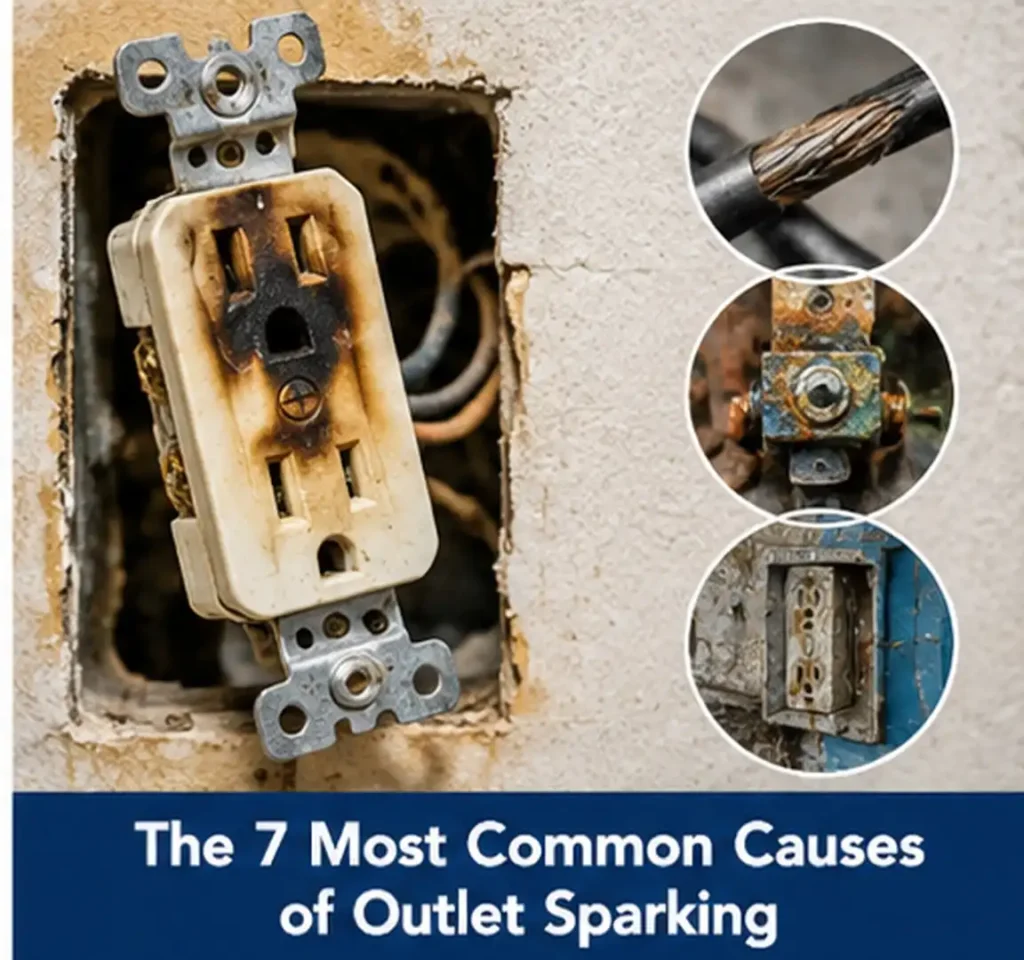
Here’s what each cause looks like in the field.
1. Normal Inrush Current
Inrush current is the surge of power a device draws the moment it connects. Appliances with motors or heating elements, like vacuums, hair dryers, and space heaters, pull a larger initial load. If the device is already switched on, you’ll see a small blue spark. This is the one type of sparking you can usually fix by simply changing a habit.
2. Worn Outlet Contacts
Every outlet has spring-tension contacts that grip the plug’s prongs. Over years of use, those contacts lose their grip. A loose fit creates a tiny gap, and electricity arcs across the gap. If your plug droops or falls out of the wall, worn contacts are the likely culprit.
3. Loose Wiring Connections
Terminal screws loosen over time from heat cycling, which is the constant expansion and contraction of metal as current flows. A loose wire at the terminal arcs under load. This is the cause behind most yellow or orange sparks we diagnose.
4. Backstabbed Outlets
A backstabbed outlet uses push-in holes on the back instead of side screw terminals. Builders use them because they install faster. The problem: push-in connections hold the wire with a small spring clip, which loosens much faster than a tightened screw. Our certified electricians frequently see this in local properties built from the 1980s through the 2000s, and it is one of the most overlooked fire risks in otherwise modern homes.
5. Moisture and Humidity
Water conducts electricity. Moisture inside a box creates unintended current paths and corrodes terminals. Chattanooga’s summer humidity, unfinished basements, and outdoor outlets without proper in-use covers all contribute.
6. Short Circuits
A short circuit happens when the hot wire touches the neutral or ground wire directly. The result is a large spark, a loud pop, and usually a tripped breaker. Shorts come from damaged insulation, pinched wires, or faults inside the appliance itself.
7. Damaged Cords and Plugs
Bent prongs, cracked plugs, and frayed cords can short the moment they enter the outlet. Test this by plugging the same device into a different outlet. If that outlet sparks too, the problem is the device, not your wiring.
Cause Comparison at a Glance
| Cause | Typical Spark | Common Locations | DIY Fixable? |
|---|---|---|---|
| Inrush current | Small, blue, instant | Anywhere | Yes, switch device off first |
| Worn contacts | Small to medium, repeated | High-use rooms | No, outlet replacement needed |
| Loose wiring | Yellow or orange | Older homes | No |
| Backstabbed outlet | Intermittent, warm plate | 1980s to 2000s builds | No |
| Moisture | Erratic, may trip GFCI | Baths, garages, exterior | Partly, dry area then call |
| Short circuit | Large, loud pop | Any circuit | No |
| Damaged cord | Spark at the plug | Any outlet | Yes, retire the cord |
Once you know the likely cause, you can work through a safe troubleshooting sequence.
Step-by-Step Troubleshooting Checklist
Safe troubleshooting means observing without opening anything. You can learn a lot from the outside of the outlet. Follow these steps in order, and stop the moment you find a red flag.
- Unplug the device and set it aside.
- Look at the outlet face for scorch marks, discoloration, or melted plastic.
- Touch the cover plate with the back of your hand. A warm plate with nothing plugged in signals a wiring problem.
- Inspect the plug and cord for bent prongs, cracks, or exposed wire.
- Switch the device off, then plug it back in. If the spark is gone, you saw normal inrush.
- Test a different device in the same outlet. Repeat sparking points to the outlet.
- Test the original device in a different outlet. Repeat sparking points to the device.
- Check the breaker panel and nearby GFCI outlets for a trip.
- Turn off the breaker if you saw anything other than a tiny blue spark.
If an outlet sparks when plugging something in and steps 2, 3, or 6 raised a flag, your next step is a professional inspection rather than more testing. Our electrical troubleshooting service is built for exactly this kind of intermittent, hard-to-pin-down problem.
What NOT to Do When an Outlet Sparks
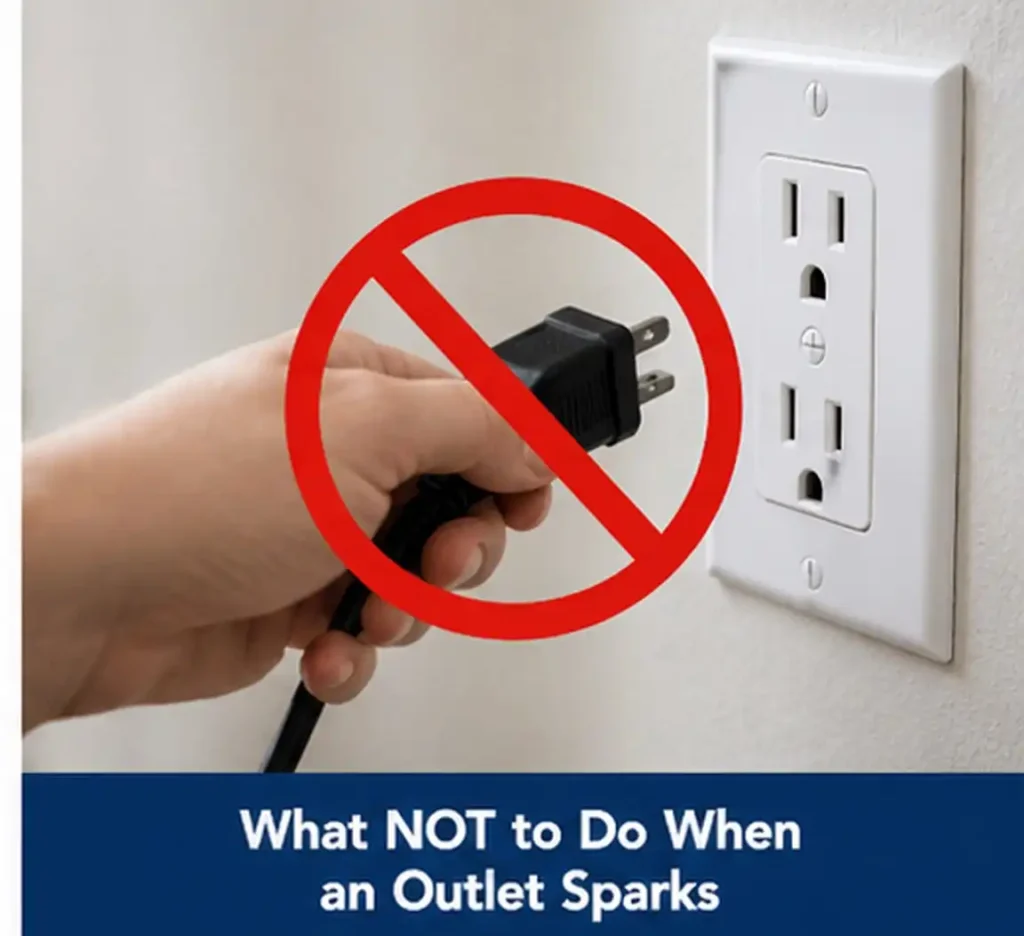
The wrong response turns a $150 repair into a fire claim. These are the mistakes we see most often.
- Don’t keep using the outlet after a large, loud, or colored spark.
- Don’t remove the cover plate to look inside while the circuit is live.
- Don’t plug in a damaged cord “just one more time.”
- Don’t use a wet outlet or touch it with wet hands.
- Don’t reset a breaker repeatedly if it trips again right away.
- Don’t tape over scorch marks or hide them behind furniture.
- Don’t swap the outlet yourself if you see aluminum wiring, cloth insulation, or no ground wire.
OSHA’s electrical safety resources list missing ground-fault protection and improper cord use among the most frequent causes of electrical injuries. Those same hazards apply in your living room, not just on a job site.
If you’re unsure whether the situation is urgent, cut power to that circuit first and make the call second.
NEC Safety Standards That Apply to Sparking Outlets
The National Electrical Code (NEC), also called NFPA 70, sets the installation rules electricians follow. Several sections apply directly to outlet sparking. Local jurisdictions adopt different editions, so a licensed electrician confirms which version applies to your address.
| NEC Section | What It Requires | Why It Matters for Sparking |
|---|---|---|
| 210.8 | GFCI protection in kitchens, baths, garages, basements, laundry areas, and outdoors | Cuts power fast when current leaks through moisture or a person |
| 210.12 | AFCI protection for most living areas, including bedrooms and family rooms | Detects dangerous arcing and shuts off the circuit |
| 406.4(D) | Replacement outlets must meet current GFCI, AFCI, and tamper-resistant rules | A simple outlet swap may trigger a protection upgrade |
| 406.9 | Weather-resistant outlets and in-use covers in wet locations | Keeps Chattanooga rain and humidity out of exterior boxes |
| 406.12 | Tamper-resistant receptacles in dwellings | Blocks objects from entering slots and protects children |
| 110.14 | Proper terminal connections, with specified torque values | Prevents the loose connections behind most yellow sparks |
| Article 250 | Grounding and bonding of electrical systems | Gives fault current a safe path back to the panel |
GFCI vs. AFCI: The Key Difference
These two devices are often confused. The distinction is simple:
- GFCI (Ground Fault Circuit Interrupter): Protects people from shock by detecting current leaking to ground.
- AFCI (Arc Fault Circuit Interrupter): Protects homes from fire by detecting arcing patterns in wiring.
An AFCI won’t fix the cause of a sparking outlet. It does shut off the circuit before arcing turns into a fire. Our GFCI and AFCI protection upgrades bring older Chattanooga circuits in line with these standards.
Repair vs. Replace: Making the Right Call
Repair and replace are not the same fix. A repair tightens or remakes connections. A replacement swaps the outlet, and sometimes the wiring, for new components.
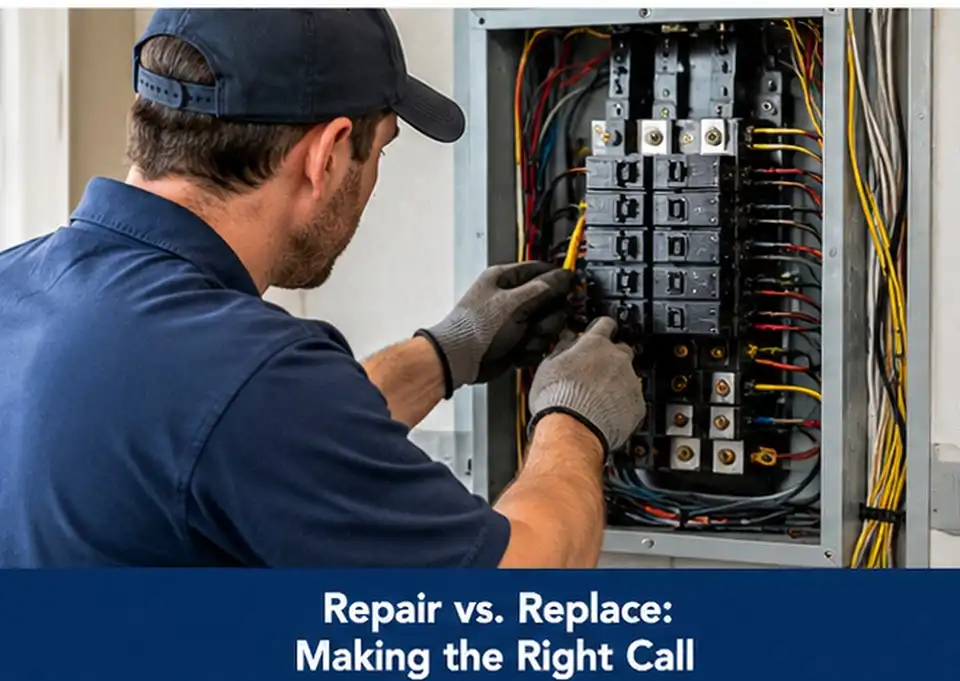
In our experience, most sparking outlets older than 15 years are better replaced than repaired.
| Factor | Repair (Tighten or Remake Connections) | Replace the Outlet | Replace Outlet + Wiring Section |
|---|---|---|---|
| Best for | Loose screw terminal, outlet under 10 years | Worn contacts, backstabbed outlet, scorch marks | Heat-damaged or brittle insulation |
| Typical lifespan after fix | Depends on outlet age | 15 to 25 years | 30+ years |
| Fixes worn contact tension? | No | Yes | Yes |
| Code upgrade opportunity | Limited | GFCI, AFCI, TR outlets | Full circuit update |
| Time on site | 30 minutes | 30 to 60 minutes | 2 to 6 hours |
| Long-term value | Low | High | Highest |
Signs You Need Replacement, Not Repair
- Plugs fall out or hang loosely.
- The outlet face is cracked, discolored, or melted.
- You find backstab connections during inspection.
- The outlet is a two-prong model with no ground.
- Sparking happens with more than one device.
When the damage goes beyond the outlet box, a full electrical repair may involve replacing a section of cable back to a sound connection point.
Cost Comparison: What Chattanooga Homeowners Can Expect
Pricing depends on the cause, the age of your wiring, and how many outlets share the problem. We believe in transparent pricing, so here are typical 2026 ranges for the Chattanooga area. Your electrician confirms an exact quote after inspection.
| Service | Typical Cost Range (2026) | What’s Included |
|---|---|---|
| Diagnostic service call | $95 to $200 | Inspection, testing, written findings |
| Standard outlet replacement | $120 to $250 per outlet | New tamper-resistant receptacle, labor |
| GFCI outlet installation | $150 to $300 per outlet | GFCI device, testing, labor |
| AFCI breaker installation | $200 to $400 per circuit | Breaker, panel work, testing |
| Dual-function GFCI/AFCI breaker | $250 to $450 per circuit | Combined protection at the panel |
| Damaged wiring section repair | $300 to $900 | Cable replacement, box repair |
| Converting backstabbed outlets | $100 to $200 per outlet | Rewiring to side screw terminals |
| Circuit rewire | $800 to $2,500 | New cable from panel to outlets |
| Emergency or after-hours visit | $250 to $500+ | Priority response, initial repair |
Cost of Waiting vs. Cost of Fixing
| Scenario | Approximate Cost |
|---|---|
| Replacing one sparking outlet now | $120 to $250 |
| Replacing outlet plus burned wiring later | $500 to $1,500 |
| Smoke and fire damage restoration | $5,000 to $50,000+ |
The math favors early action every time. If you’re comparing quotes, line up the scope, including permits, protection devices, and patching, so you compare like for like.
When to Call a Professional Electrician
A professional is the right call any time the spark is more than a tiny blue flash. If an outlet sparks when plugging something in and you see any of the following, schedule service:
- Sparks are large, loud, yellow, or orange.
- You smell burning plastic or see smoke.
- The outlet or plate feels warm.
- Scorch marks or melted plastic appear on the face.
- The breaker trips each time you plug in.
- Lights flicker when you use the outlet.
- Sparking occurs with multiple devices.
- Your home has aluminum wiring or original cloth-insulated wiring.
What Our Electricians Check on Site
- Shut off power at the panel and verify it with a tester.
- Remove the outlet and inspect terminals for looseness, corrosion, and heat damage.
- Check the connection type, flagging any backstabbed wires.
- Test the circuit for proper grounding and polarity.
- Inspect upstream outlets on the same circuit for related damage.
- Confirm GFCI and AFCI coverage matches current code.
- Explain findings in plain language with a clear price before work begins.
For smoke, burning smells, or a breaker that won’t stay on, our emergency electrical service connects you with a local electrician fast.
Prevention Tips: Keep Sparks From Coming Back
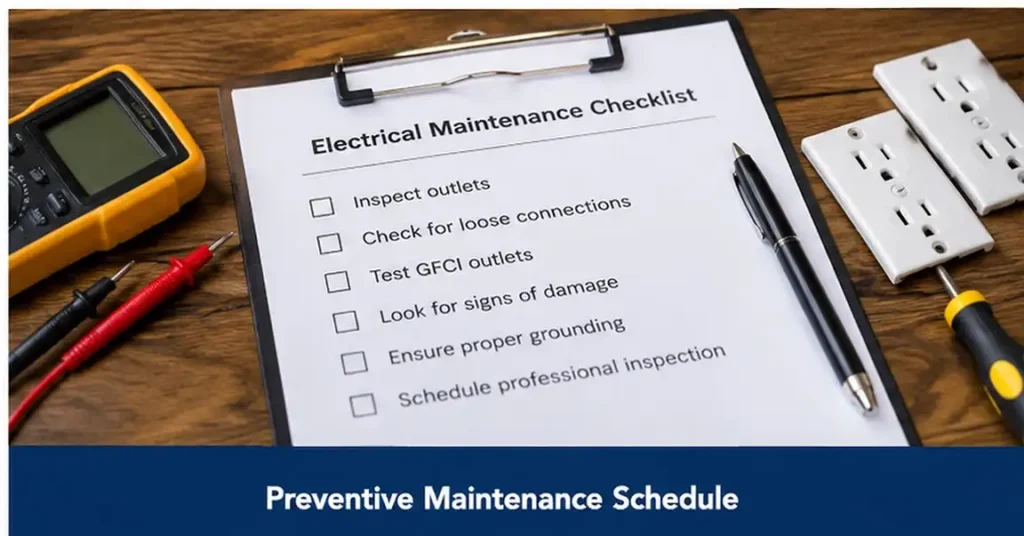
Prevention comes down to good habits and periodic checks. Most repeat sparking is avoidable. Use this checklist season by season.
Daily Habits
- Switch devices off before plugging them in or unplugging them.
- Pull the plug head, never the cord.
- Avoid overloading outlets with multi-plug adapters.
- Keep high-draw appliances, like space heaters, on their own outlet.
Seasonal Maintenance Checklist
| Season | Task | Why It Matters in Chattanooga |
|---|---|---|
| Spring | Test every GFCI with the test button | Storm season brings surges and outdoor moisture |
| Summer | Check basement and garage outlets for corrosion | Peak humidity accelerates terminal rust |
| Fall | Inspect cords for space heaters before first use | Heaters are high-draw, high-risk devices |
| Winter | Feel cover plates on heavily used outlets | Holiday lighting adds extra load |
| Every 3 to 5 years | Schedule a professional electrical inspection | Catches loose connections before they arc |
Upgrades Worth Considering
- Tamper-resistant outlets throughout the home.
- AFCI protection on bedroom and living area circuits.
- Whole-home surge protection at the panel for storm season.
- Weather-resistant outlets with in-use covers outdoors.
We serve Chattanooga, Soddy-Daisy, Cleveland, Ringgold, and dozens of nearby communities. Check our service areas across the Chattanooga region to confirm coverage for your address.
FAQs
Is it normal when an outlet sparks when plugging something in?
A small, quick blue spark is normal when the device is already switched on. It comes from inrush current at the moment of contact. Large, loud, yellow, or orange sparks are not normal and need inspection.
Can a sparking outlet cause a fire?
Yes. Repeated arcing creates heat that damages insulation and nearby materials. Frequent or large sparks should be treated as urgent.
Should I turn off the breaker for a sparking outlet?
Yes, if the spark was large, repeated, or left a mark. Turn off the breaker only if you can reach the panel safely. Keep it off until an electrician checks the outlet.
Why does my outlet spark with only one appliance?
The appliance’s cord, plug, or internal parts may be damaged. High-draw devices also pull more start-up current. Test the appliance in another outlet to isolate the problem.
Will an AFCI breaker stop my outlet from sparking?
No. An AFCI detects dangerous arcing and shuts off the circuit, which lowers fire risk. The underlying cause still needs repair.
My outlet sparked and now it doesn’t work. What should I do?
Check for a tripped breaker or tripped GFCI elsewhere on the circuit. If the breaker trips again after one reset, leave it off. Call for professional help.
Can I replace a sparking outlet myself?
Simple outlet swaps look easy. The risk lies in what’s behind the plate: heat-damaged wire, aluminum conductors, or missing grounds. Replacement outlets must also meet current code for GFCI, AFCI, and tamper resistance, so a licensed electrician is the safer choice.
How long do outlets last?
Most outlets last 15 to 25 years with normal use. High-traffic outlets in kitchens and bathrooms wear out sooner. Loose plug fit is the clearest sign of a worn outlet.
The Bottom Line on Sparking Outlets
A sparking outlet is a diagnostic signal, not a mystery. Here’s what to remember:
- Small and blue usually means normal inrush; switch devices off first.
- Large, colored, loud, or marked means a fault; cut the breaker and call a pro.
- Replacement beats repair for outlets with worn contacts or backstab connections.
When an outlet sparks when plugging something in at your Chattanooga home, the safest move is simple: observe, cut power if anything looks wrong, and have a certified electrician inspect it. At Chattanooga TN Electrician, our Gov Certified electricians work 7 days a week with transparent pricing and plain-language explanations. Call today and describe what you saw, and we’ll help you decide how urgent it is.