Repairs & Diagnostics

Home Electrical Repair in Chattanooga

Electrical repair means fixing a part of your home's system that has failed or been damaged: an outlet that went dead, a switch that no longer clicks, a fixture that flickers, or a wire chewed by a squirrel in the attic. When you already know what is broken, a repair visit is usually the right fit.

Your call connects you with an independent local electrician who serves your area.

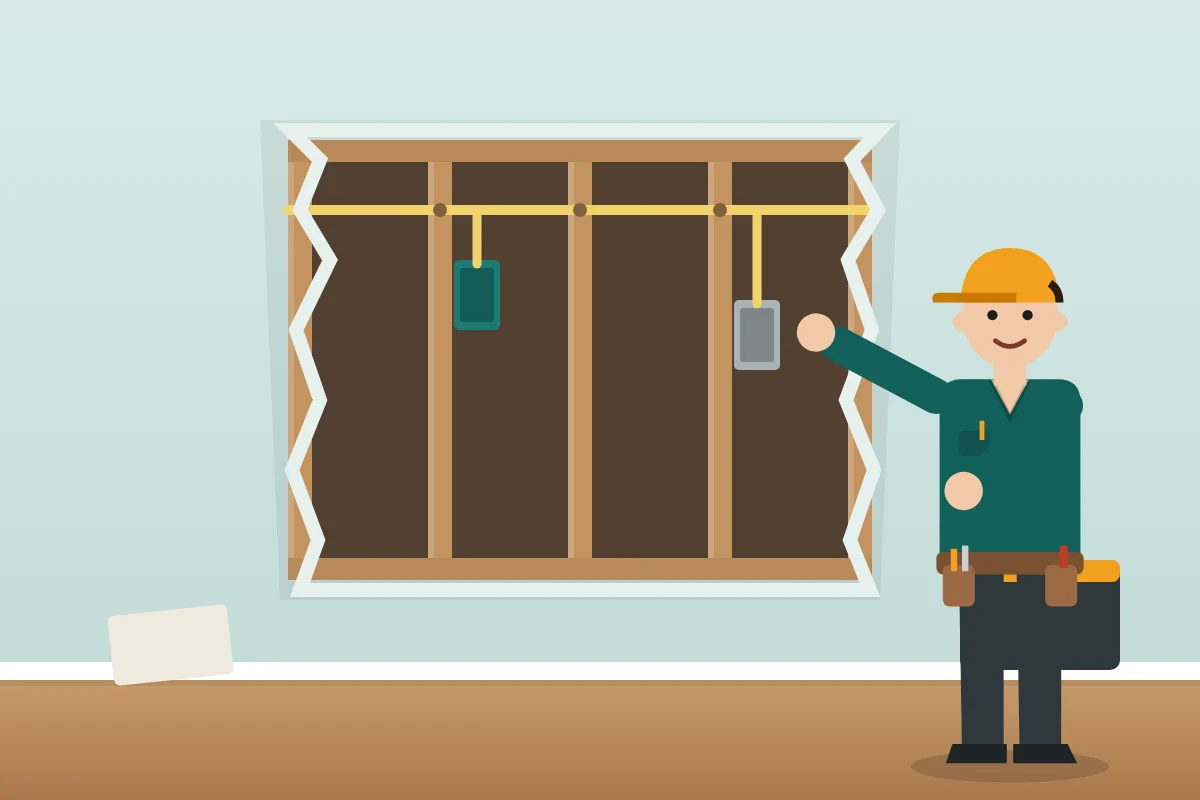
Illustration of an electrician repairing wiring behind opened drywall

Most homeowners call for electrical repair in Chattanooga after something stops working, smells odd or looks scorched. If there is smoke or active sparking, that is a job for emergency electrical help instead. A call connects you with an independent local electrician who can look at the problem, explain what failed and make the repair to current standards.

What a Repair Visit Covers

A typical repair targets a specific device or circuit. The electrician confirms the circuit is off, opens the box, and looks at the device and the wiring behind it. Many failures come down to loose terminal screws, worn backstab connections, cracked device bodies or heat damage on a conductor.

Sometimes the visible symptom points to a bigger issue, such as a failing breaker or an overloaded circuit. In that case the electrician should tell you what they found and give you options rather than simply swapping a part. If the cause is not obvious, the visit may turn into a diagnostic visit first.

Common Reasons Homeowners Call for Repairs

  1. A kitchen or bathroom outlet stopped working and resetting the GFCI did not help.

  2. A light switch feels loose, buzzes or only works when pressed a certain way.

  3. A ceiling fixture flickers even with a new bulb.

  4. Storm damage pulled down the line to the house or damaged an outdoor outlet.

  5. Pests or a remodeling accident damaged a wire in the attic or a wall.

Signs Something Needs Fixing

  • Scorch marks, melted plastic or discoloration on a cover plate.
  • A faint burning or hot plastic smell near an outlet or switch.
  • Plugs that fall out of a receptacle or feel loose.
  • One breaker that trips repeatedly on the same circuit.
  • Lights that dim sharply when an appliance starts.

What the Repair May Involve

Repairs range from replacing a single receptacle to splicing in a new section of cable or replacing a breaker. In older homes the electrician may find aluminum branch wiring, ungrounded circuits or brittle insulation that changes the scope of the job.

  • Terminal connections tightened or remade
  • Damaged devices, plates and boxes replaced
  • Wire insulation checked for heat or physical damage
  • Breaker condition and size matched to the wire
  • GFCI and AFCI protection confirmed where required
Illustration of a homeowner and an electrician reviewing project plans at a dining table
Illustration. People shown are not contractors listed on this site.

How it usually works

  1. Call and describe the problem

    Tell the call line what stopped working, where it is and what you have already tried.

  2. Get connected

    You are connected with an independent local electrician who can talk through timing and next steps.

  3. On-site repair

    The electrician finds the failed part, explains the cause and makes the repair.

  4. Confirm it works

    The circuit is tested under normal use before the job is closed out.

For homes around Chattanooga

Many homes in Chattanooga's older neighborhoods, such as North Shore, St. Elmo and Highland Park, were built in the early and mid 1900s. Their wiring has often been extended and patched over decades, so a simple outlet repair can uncover older splices or ungrounded circuits. Mature trees on hillside lots also mean storm limbs regularly damage service drops and outdoor wiring after spring storms.
Related problems

Problems that often lead to electrical repair

  • Outlet Sparks When Plugging In

    A small, brief spark can be normal when plugging in a device that's switched on, but large, loud or repeated sparks point to a problem.

    Act promptly
  • Outlet Falls Out of Wall

    An outlet that pulls out of the wall usually has a loose box, missing mounting ears or crumbling plaster, and it stresses the wiring every time you unplug something.

    Get it checked soon
  • Switch Plate Feels Warm

    A warm switch plate is sometimes harmless, but heat at a standard toggle switch often points to a loose or worn connection.

    Get it checked soon
  • GFCI Outlet Won't Reset

    A GFCI that will not reset may have no power, may be sensing a real ground fault, or may simply have worn out.

    Get it checked soon

Related services

Often planned alongside electrical repair

Repairs & Diagnostics

Electrical Troubleshooting

Tracking down the cause of intermittent outages, flickering, odd tripping and other electrical problems that have no obvious source.

Repairs & Diagnostics

Emergency Electrical Service

Guidance for urgent electrical hazards at home and a way to reach an independent local electrician when something cannot wait.

Wiring & Older Homes

GFCI & AFCI Protection

Shock protection near water and arc-fault protection for living spaces, added or corrected by a local electrician in the Chattanooga area.

Panels, Breakers & Service

Circuit Breaker Services

Help with individual breakers that trip, run hot, feel loose or need replacing, plus new breakers for added circuits.

Service areas

Electrical Repair around Chattanooga

Homeowners from Soddy-Daisy to Ringgold call about electrical repair. Calls go to participating independent electricians; pick your community for local context.

See every service area →

FAQ

Electrical Repair: common questions

Straight answers to the questions homeowners ask most about this topic.

Call Now

Yes. A dead outlet is often caused by a tripped GFCI elsewhere on the circuit, but it can also be a loose connection that has started to overheat. If resetting nearby GFCIs and the breaker does not restore power, have an electrician look at it.

A failed device usually gets replaced rather than repaired, since outlets and switches are not built to be serviced. Replacing every outlet in a home is a different project and only makes sense if many are worn, loose or ungrounded.

Repeated plugging and unplugging, loose terminal screws, backstab connections that lose tension and heat from heavy loads all wear devices down. Older homes may also have devices that are simply past their service life.

Simple like-for-like device replacements often do not, but rules vary by city and county. Replacing circuits, panels or service equipment commonly does. The electrician you are connected with should know what the local permit office expects.

If there is no heat, smell, sparking or repeated tripping, and the circuit is simply off, it may be able to wait a short time. Anything showing heat or burning signs should not wait, and you should keep that circuit off until it is fixed.

Describe what stopped working, when it started, whether a breaker tripped and anything that changed recently, such as a new appliance or storm. Photos of scorch marks or damage can help the electrician come prepared.

Call now

Ready to talk about electrical repair?

One call connects you with a local electrician who can look at your home and explain your options.

Your call connects you with an independent local electrician who serves your area.