What you may be noticing
- The outlet pulls forward when you unplug something.
- There's a gap between the cover plate and wall.
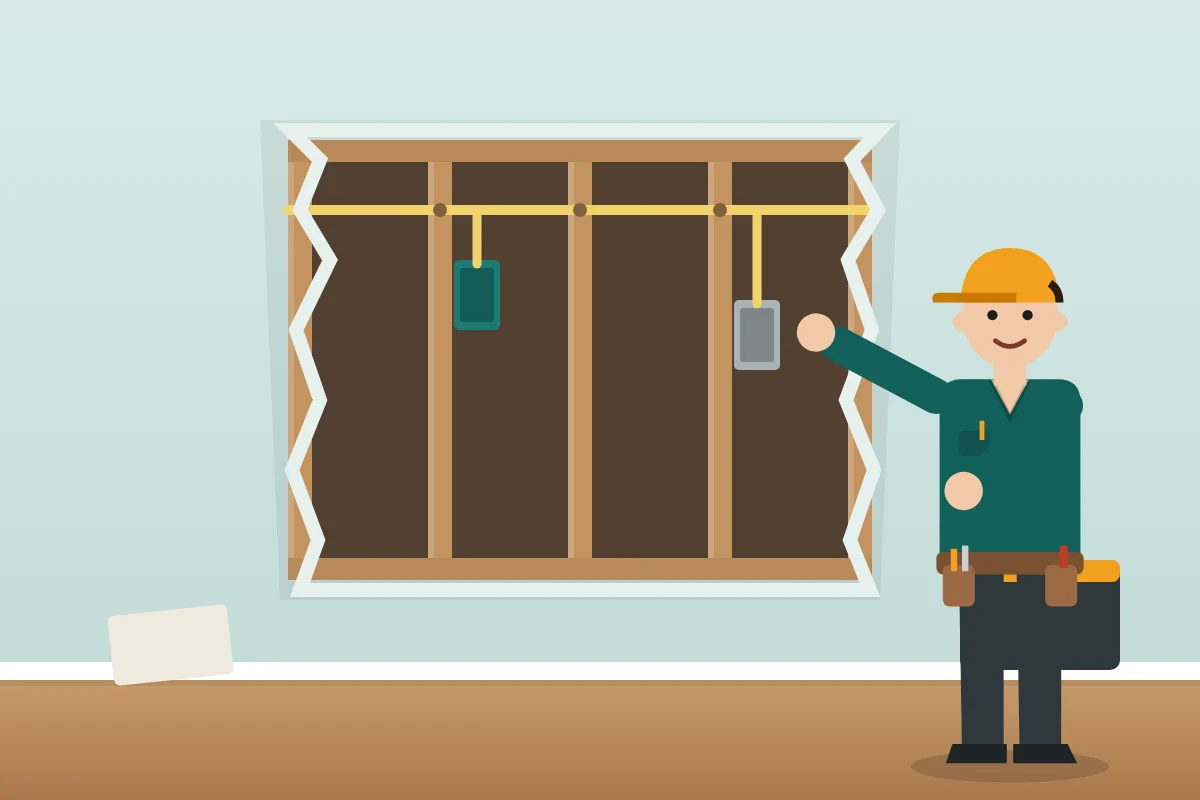
- You can see the box or wiring around the edges.
- The outlet works intermittently.
Common possible causes
Loose box
Boxes can detach from studs or loosen in drywall, especially old-work boxes held by clips.
Missing or broken mounting ears
The outlet's plaster ears or the box screws may be broken or stripped.
Old plaster
Many early and mid 1900s homes in Chattanooga have plaster walls that crumble around boxes over time.
Box set too deep
When walls are thickened by paneling or tile, outlets can sit behind the surface without extenders.
No box at all
In some older homes or DIY work, outlets are mounted without a box.

Safe checks you can make
- Check whether the outlet moves when you plug or unplug.
- Look for gaps, cracked plaster or visible wiring around the plate.
- Note whether the outlet works reliably.
- Check other outlets nearby for similar movement.
What not to do
- Don't push the outlet back in with your fingers or tape it in place.
- Don't pull hard on plugs from a loose outlet.
- Don't remove the cover plate to fix it while power is on.
- Don't stuff wiring back into the wall.
Can you sort this out yourself?
If the outlet only has a loose cover plate screw and the outlet itself is solid, tightening that screw may be enough. If the outlet or box moves, has broken ears, or there's no box, the repair involves the electrical connections and should go to an electrician. Avoid using it heavily until it's fixed.
When professional help is appropriate
- The outlet or box moves when plugging in.
- Wiring is visible or damaged.
- The outlet works intermittently or is warm.
- Several outlets are loose in an older home.
- There's no electrical box behind the outlet.
What an electrician typically checks
An electrician will shut off power, check the connections and wire condition, and secure the box. They may replace the outlet, add box extenders or install an old-work box designed to clamp into plaster or drywall.
In homes with several loose outlets, an electrical repair visit can address them together. If wiring is aged or the insulation is brittle, older home updates may make sense rather than repairing one box at a time.
Keeping it from coming back
Pull plugs by the plug body instead of the cord, avoid heavy plug-in adapters and chargers that lever the outlet forward, and have loose outlets fixed early. If you're adding paneling, tile or a backsplash, make sure boxes are brought flush with the new wall surface. In houses with old plaster, it's worth asking the electrician to check outlets in the busiest rooms (kitchen counters, bedside outlets, the spot where the vacuum gets plugged in) since those loosen first.