Quick answer: An electrical safety checklist is a walk through your home that looks for warning signs you can see, hear, smell or feel without tools: warm or discolored outlets, breakers that trip often, flickering lights, missing cover plates, overloaded power strips and untested GFCI or smoke alarms. Anything that fails the check is a reason to have a qualified electrician take a closer look. You never need to open the panel or remove a cover to complete it.
Most electrical problems give some kind of warning before they become dangerous. A switch plate that feels warm, a light that dims when the air conditioner kicks on, a faint burning smell near an outlet: these are small signals that are easy to ignore during a busy week. A simple electrical safety checklist turns those scattered observations into a routine you can repeat once or twice a year.
This guide is written for Chattanooga-area homeowners, where housing ranges from early 1900s homes in North Shore and St. Elmo to newer suburban builds. The checks below are all things you can do with your eyes, ears, nose and a hand held near (not on) a cover plate. None of them involves opening the panel, pulling outlets out of the wall or touching wiring.
Before you start: what this checklist is and is not
Think of this as a screening, not an inspection. You are looking for symptoms, the same way you might notice a car pulling to one side. A licensed electrician uses meters, thermal checks and access behind covers to find causes. Your job is simply to notice and write things down.
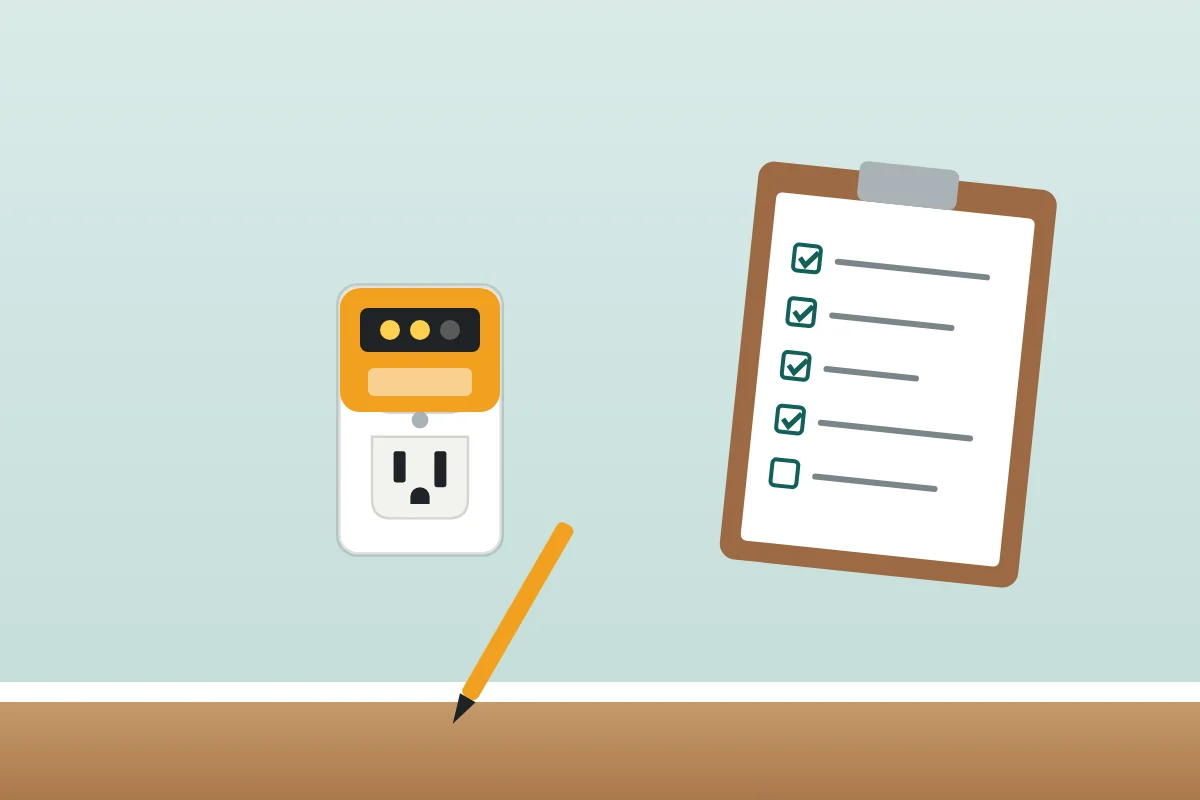
Grab a notepad or your phone. Note the room, what you noticed and when it happens (for example, only when the dryer runs). That detail is genuinely useful to the electrician later.
Room-by-room checklist
Walk through the house in order so nothing gets skipped. In each room, look for the items below.
- Outlets and switches: cracked, loose or discolored cover plates; plugs that fall out easily; any outlet or switch that feels warm to the back of your hand.
- Cords: extension cords run under rugs or pinched behind furniture; power strips plugged into other power strips; cords with damaged insulation.
- Lighting: bulbs that flicker, fixtures that buzz, or bulbs with a higher wattage than the fixture label allows.
- Kitchen and bathrooms: GFCI outlets near sinks and counters that trip and reset normally when you press TEST and RESET.
- Bedrooms and hallways: smoke alarms present and working; carbon monoxide alarms if the home has gas appliances or an attached garage.
- Garage and exterior: outdoor outlets with weatherproof covers that close; no cords run through doors or windows to power tools or freezers.
The panel area: look, don't open
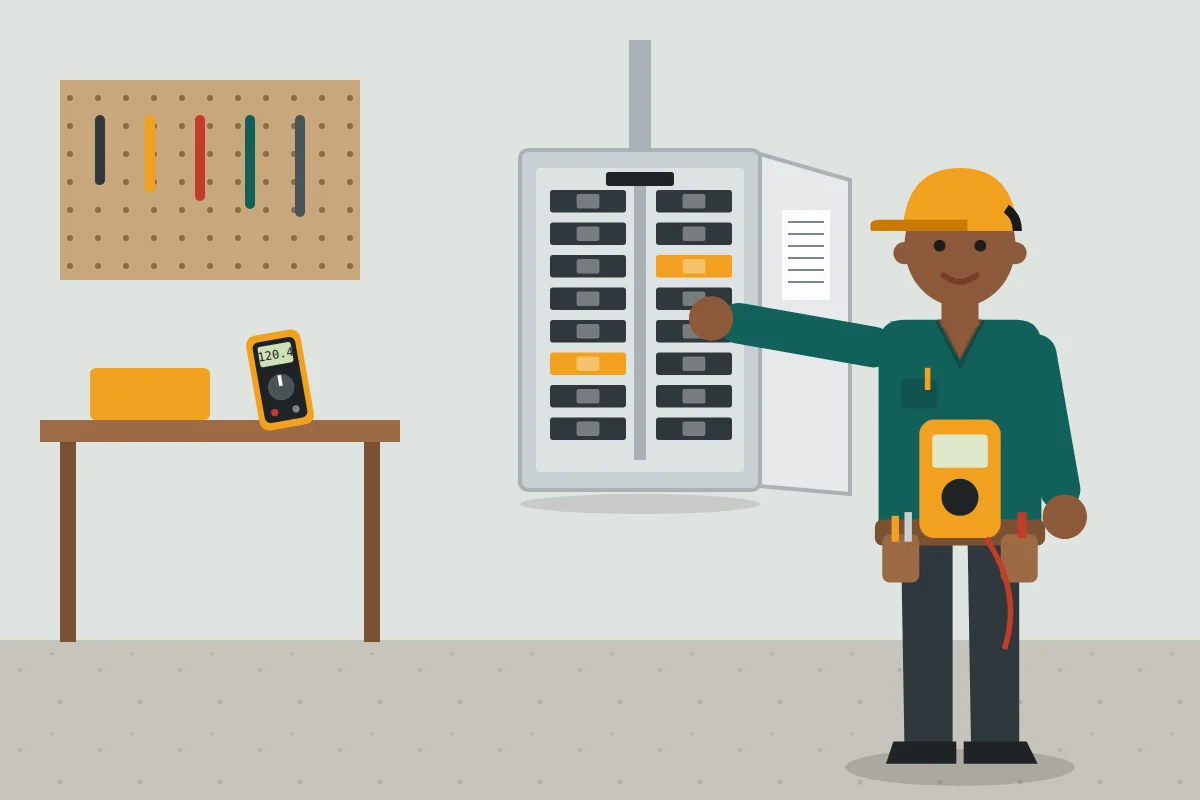
The electrical panel deserves a look from the outside only. Stand in front of it with the door closed or with just the outer door open, the way you would to flip a breaker.
- Is the area clear? Panels need open space in front of them, not boxes or shelving.
- Is the door intact and the label (circuit directory) readable?
- Any rust, water stains or moisture on or above the panel?
- Any warmth, buzzing or burning smell at the panel?
- Do certain breakers trip often, or do you reset the same one month after month?
If the panel is an older Federal Pacific or Zinsco unit, or you are unsure, the guide on how to tell if a panel is outdated walks through what to look for.
Checks that happen with the seasons
Chattanooga's weather adds a few items worth checking at certain times of year. Spring and fall storms, hot humid summers and the occasional winter ice storm all put stress on a home's electrical system.
Spring
After storm season starts, look at where the service drop meets the house. Limbs from mature trees on hillside lots often rub or rest on those lines. Do not touch them; report concerns to the utility and an electrician.
Early summer
Before peak air conditioning load, notice whether lights dim when the AC or heat pump starts. Repeated dimming can point to a loose connection or a strained circuit.
Fall
Test smoke and CO alarms and replace batteries. Check that outdoor GFCI outlets still trip and reset before holiday lighting goes up.
Winter
If you use space heaters, plug them directly into a wall outlet, never into an extension cord or power strip, and keep them clear of bedding and curtains.

What to do with what you find
Sort your notes into three groups. Things that are plainly urgent (heat, smell, sparking, repeated tripping) should get attention soon. Things that are worn but stable (a cracked plate, a loose outlet) can be handled during a planned visit. Things that are simply questions (is this panel too old?) are good material for an electrical inspection.
If your list grows long, or you live in an older home, it may make sense to bundle several small fixes into one visit focused on electrical safety upgrades rather than calling about each item separately.