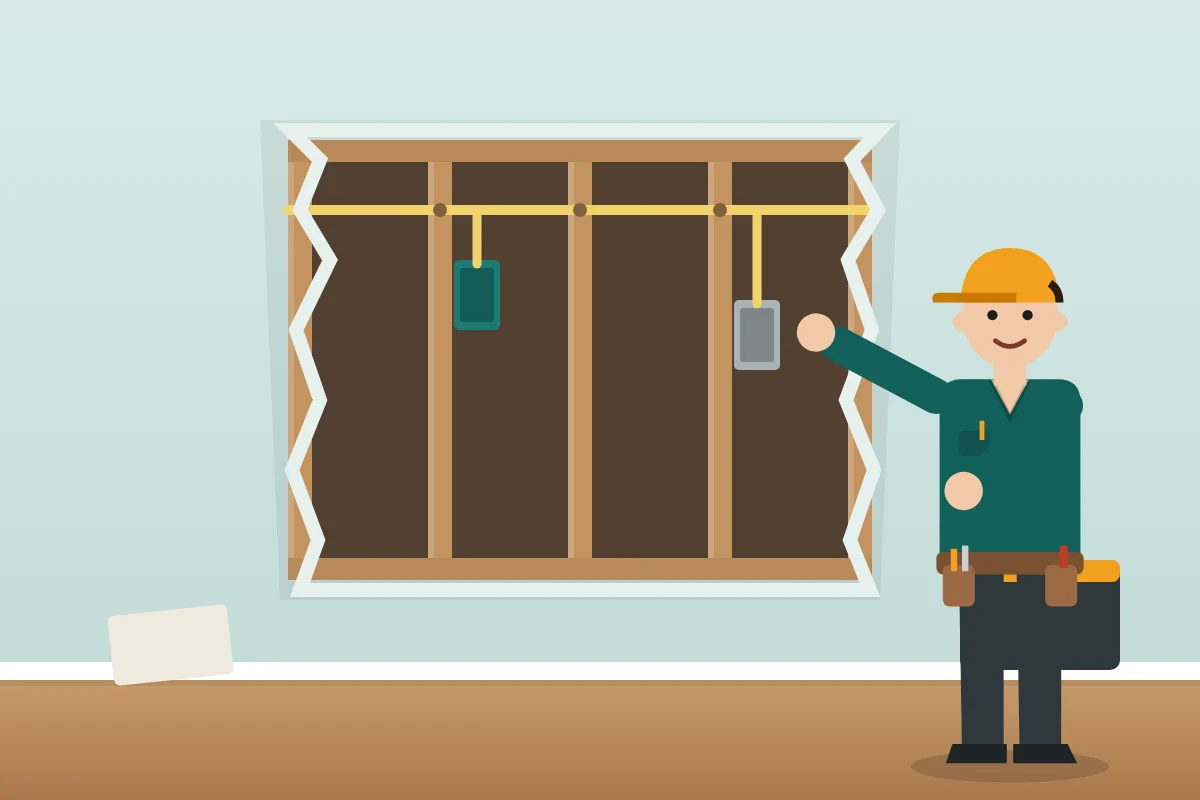
House rewiring often comes up in older homes with knob-and-tube or early cloth-insulated cable, after a fire or flood, or before a gut renovation. A local electrician can tell you whether the house truly needs it or whether targeted older-home electrical updates would be enough.
What a Full Rewire Includes
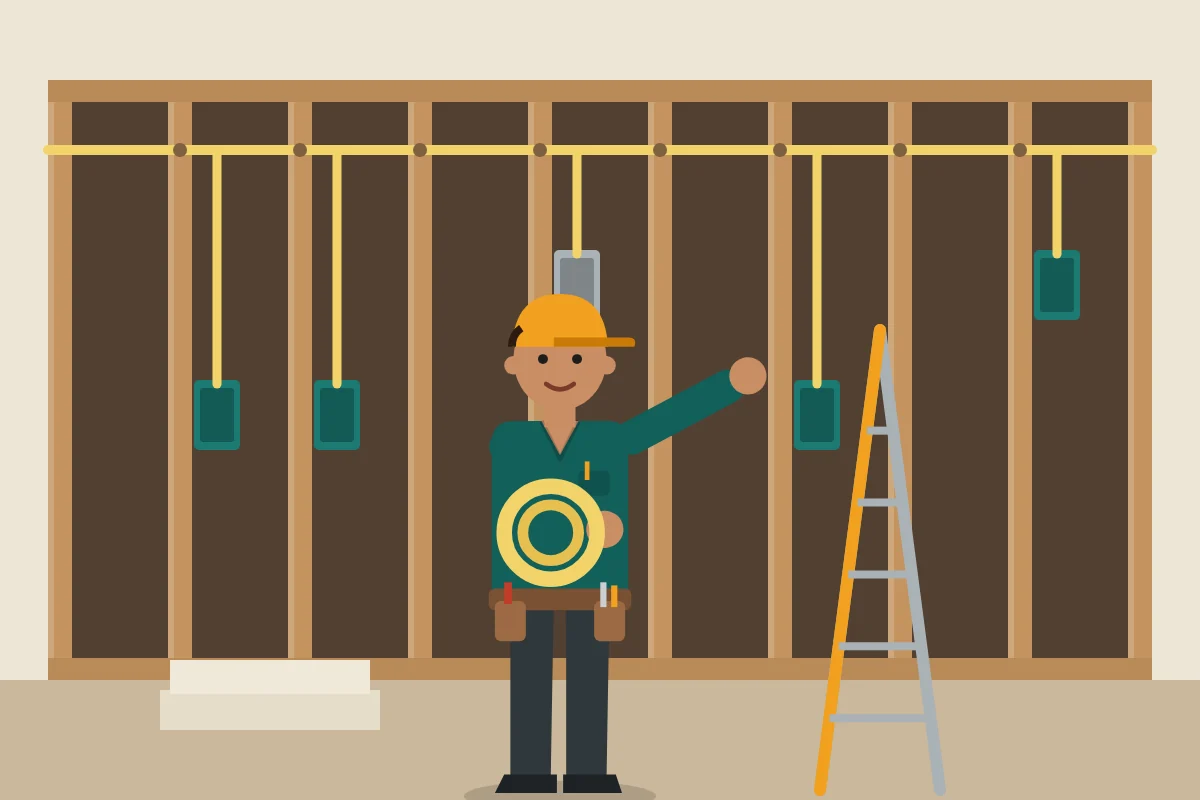
A typical rewire runs new circuits to every room, replaces outlets and switches with grounded devices, adds GFCI and AFCI protection where required, installs hardwired smoke and CO alarms, and moves everything to a panel with room to grow. Old wiring is disconnected and, where reachable, removed.
Electricians usually work through attics, crawl spaces and basements, opening walls only where necessary. In homes with plaster walls, careful planning keeps cuts small. Some homeowners time a rewire with a remodel, since walls are already open.
When Rewiring the House Makes Sense
The house still relies on active knob-and-tube wiring.
Cloth-insulated wire is brittle and crumbling at outlets and fixtures.
An insurer or buyer will not move forward without updated wiring.
A gut remodel is opening most walls and ceilings anyway.
Fire, flood or rodent damage affected wiring across much of the house.
Clues the Wiring Throughout the House Is Worn Out
- Two-prong outlets in most rooms and no grounding anywhere.
- Frequent warm outlets, flickering or tripping across many circuits.
- Wire insulation that cracks or flakes when touched by an electrician.
- A patchwork of old and new wiring from decades of additions.
- Very few circuits serving the entire house.
How a Rewiring Project Is Planned and Phased
Rewiring usually starts with a room-by-room plan, a permit, and a decision about the panel and service size. Many homeowners stay in the house while work moves area by area. Rough-in inspection happens before walls are patched, and a final inspection closes out the job.
- Existing wiring types and condition in every area
- Panel and service capacity for the new layout
- Outlet, lighting and switch locations for each room
- Access routes through attic, crawl space and walls
- Alarm locations and GFCI and AFCI requirements
- Patching and plaster repair responsibilities
How it usually works
Call to begin
Call to connect with an independent local electrician and share the home's age and any reports about the wiring.
Assessment and plan
The electrician assesses existing wiring and lays out a room-by-room plan, including panel needs.
Phased installation
New circuits are installed area by area, with rough-in inspection before walls are closed.
Final inspection
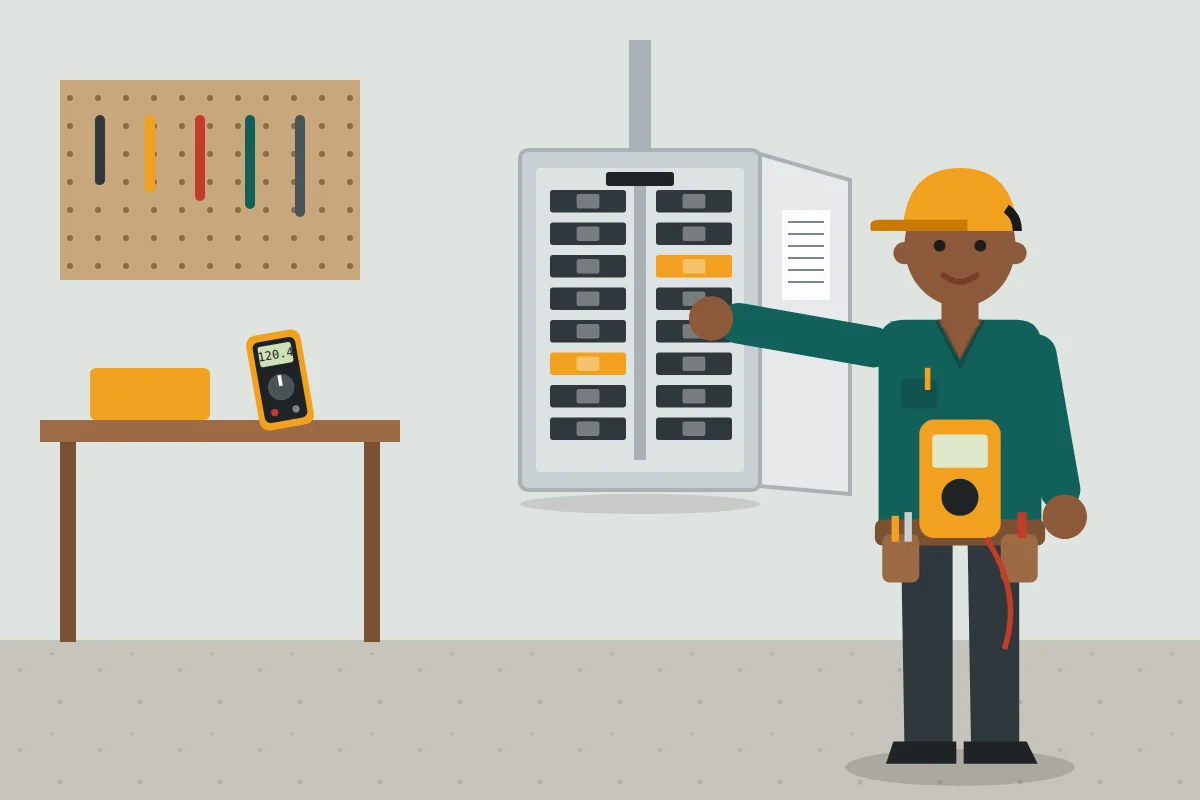
Devices and alarms are installed and tested, old circuits are retired, and the final inspection is completed.
For homes around Chattanooga
Chattanooga neighborhoods like St. Elmo, Highland Park and North Shore have many homes from the early 1900s, and some still carry original knob-and-tube or cloth-insulated wiring behind plaster. For a practical framework on timing, read when to consider rewiring an older house before making the call.