Generators, EV & Smart Home

Home EV Charger Installation in Chattanooga

EV charger installation means adding a dedicated 240-volt circuit so an electric vehicle can charge at home much faster than it would from an ordinary wall outlet. Most homeowners who buy or lease an EV eventually want this, because overnight charging on a standard receptacle often cannot keep up with a daily commute.

Your call connects you with an independent local electrician who serves your area.

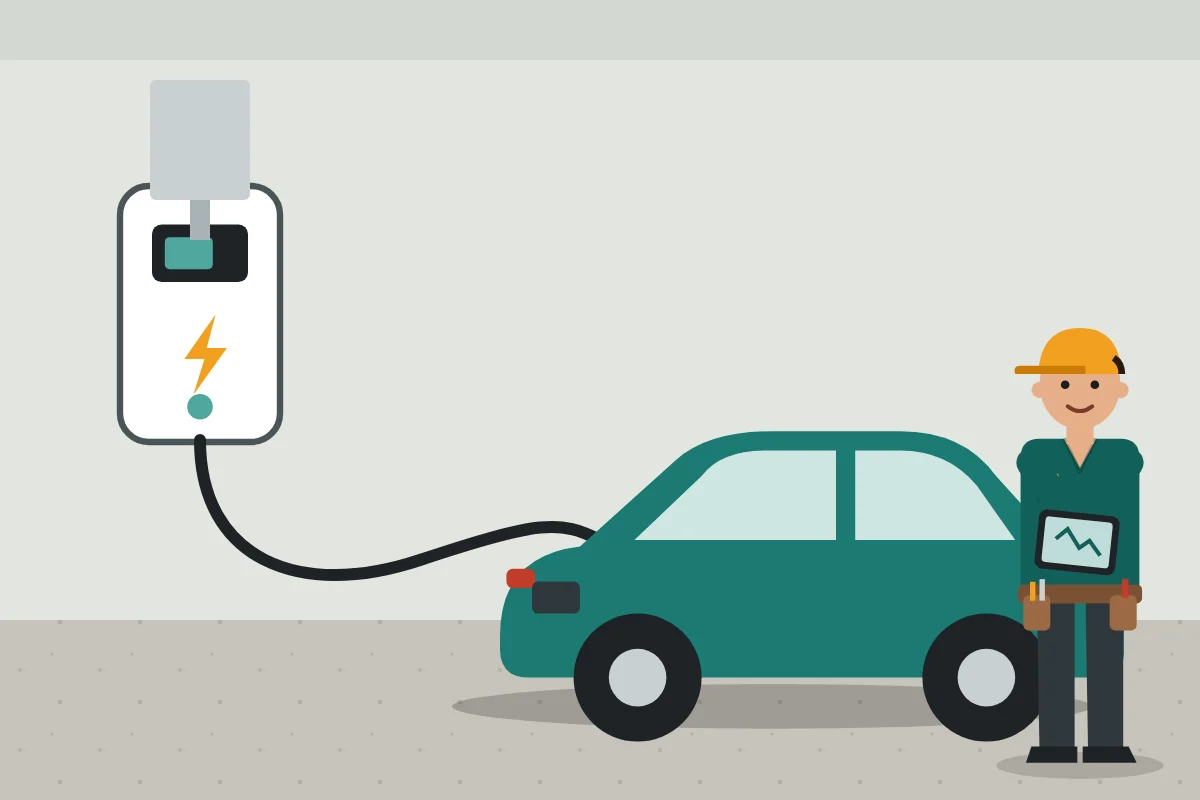
Illustration of a wall-mounted EV charger connected to an electric car in a home garage

The charger itself is only part of the job. The bigger questions are whether the electrical panel has room and capacity for a large continuous load, how far the circuit has to run, and where the cord will reach the car without becoming a tripping hazard.

What a Level 2 Charging Setup Involves

A Level 2 charger runs on 240 volts, the same kind of power used by a dryer or range. It can be hardwired to the wall or plugged into a heavy-duty 240-volt receptacle. Because an EV can pull steady current for hours, the circuit has to be sized for a continuous load, and the wire, breaker and any receptacle must all match the charger's rating.

Before anything is installed, an electrician usually runs a load calculation. That compares what your home already uses (heat pump, water heater, range, dryer) with what the service can safely supply. Some homes have plenty of room. Others need load management, a smaller charger setting or an electrical service upgrade first.

Common Reasons Homeowners Add a Charger

  1. You just bought an EV or plug-in hybrid and the trickle charger is too slow.

  2. A second electric vehicle is coming and one circuit will not cover both.

  3. You are building or finishing a garage and want charging roughed in now.

  4. Your car parks in a driveway or carport, so the charger needs outdoor-rated equipment.

  5. You are selling a home and want a charging-ready circuit as a feature.

Signs Your Current Charging Setup Falls Short

  • The car is not full by morning on a standard household outlet.
  • An extension cord is part of your daily charging routine.
  • The charger breaker trips during long sessions or hot afternoons.
  • The receptacle or plug feels warm or looks discolored.
  • Your panel is already full and you are not sure there is space for a two-pole breaker.

What the Installation May Include

Most jobs come down to capacity, distance and location. A short run from a garage panel is simple; a long run to a detached carport or a panel with no open spaces adds work. Local permit and inspection rules also apply in most jurisdictions around Chattanooga.

  • Panel capacity and a load calculation for the whole home
  • Open breaker spaces for a two-pole breaker
  • Wire size and route from the panel to the charger location
  • Indoor or outdoor rating of the charger and receptacle
  • Cord reach to the charge port without crossing walkways
  • Permit and inspection requirements for your city or county
Illustration of an electrician installing kitchen lighting above an island with pendants
Illustration. People shown are not contractors listed on this site.

How it usually works

  1. Call and describe your setup

    Share your vehicle, where you park and the age of your panel. The call connects you with an independent local electrician.

  2. On-site look at capacity

    The electrician checks the panel, runs a load estimate and walks the route from the panel to the parking spot.

  3. Circuit and charger installation

    A dedicated circuit is installed, the charger is mounted or the receptacle is set, and labeling is completed.

  4. Testing and inspection

    The charger is tested under load, and any required inspection is scheduled with the local authority.

For homes around Chattanooga

Many Chattanooga-area families live in fast-growing suburbs where garages are close to the panel, which keeps runs short. Older homes in the city core and mid-century ranches often have smaller services already working hard under summer AC load, so the load calculation matters more there. Homes on hillside lots sometimes park well below or above the house, which can stretch the circuit run.
Related problems

Problems that often lead to ev charger installation

  • EV Charger Keeps Tripping Breaker

    An EV charger that trips its breaker is usually on a circuit that's too small, has a loose connection, or is clashing with GFCI protection.

    Get it checked soon
  • Not Enough Breaker Space in Panel

    Running out of panel slots is common when adding an EV charger, hot tub or remodel circuits, and there are usually several ways to make room.

    Usually not an emergency
  • Breaker Trips After Installing New Appliance

    A new appliance that keeps tripping a breaker usually points to an overloaded circuit, a wrong-size breaker or a wiring fault at the new connection.

    Get it checked soon

See the work

A home EV charger installation

A short look at what ev charger installation can involve in a typical house. Every home is different, and the electrician you speak with will explain the steps for yours.

A home EV charger installation

Related services

Often planned alongside ev charger installation

Garages, Outdoors & Pools

Garage Electrical

Attached garages often have one or two outlets and a bare bulb; adding circuits, lighting and GFCI protection makes the space usable.

Panels, Breakers & Service

Electrical Service Upgrades

Increasing the size of the home's electrical service, based on a load calculation and coordinated with the power company.

Wiring & Older Homes

Dedicated Appliance Circuits

Single-appliance circuits for microwaves, freezers, dryers, ranges and well pumps, added by a local electrician in the Chattanooga area.

Panels, Breakers & Service

Electrical Panel Repair & Replacement

When the breaker box itself is worn, damaged, full or an older problem model, an electrician can repair it or replace it with a new panel.

Service areas

EV Charger Installation around Chattanooga

Homeowners from Soddy-Daisy to Ringgold call about ev charger installation. Calls go to participating independent electricians; pick your community for local context.

See every service area →

FAQ

EV Charger Installation: common questions

Straight answers to the questions homeowners ask most about this topic.

Call Now

Sometimes a dryer circuit can be shared with a switching device or swapped for charging, but it depends on the circuit rating, the charger and local rules. An electrician can tell you whether that approach is safe and allowed in your home.

Not always. Many homes can add a charger without a service upgrade, especially if the charger is set to a lower current. A load calculation is the honest way to know, because it accounts for your heat pump, water heater and other large appliances.

Both can be safe when installed correctly. Hardwired units avoid wear on a receptacle and can sometimes run at a higher setting, while plug-in units are easier to move. Your electrician can explain which fits your parking spot and panel.

Yes, as long as the charger, receptacle and wiring are rated for outdoor use and installed with the right protection. Cord length, rain exposure and where the car's charge port sits all affect placement.

Long charging sessions can expose a weak breaker, loose connection, undersized wire or a circuit that was never meant for continuous current. See why an EV charger keeps tripping for what to observe before you call.

Most cities and counties in the area require a permit for a new 240-volt circuit, though the exact rules vary by jurisdiction. The electrician you speak with should know the local process and any inspection that follows.

Call now

Ready to talk about ev charger installation?

One call connects you with a local electrician who can look at your home and explain your options.

Your call connects you with an independent local electrician who serves your area.