What you may be noticing
- You want to add an EV charger, hot tub, shop circuit or heat pump and there are no open slots.
- A contractor said the panel is full before they could start your project.
- Earlier additions were wired through existing circuits instead of new ones.
Common possible causes
Small original panel
Homes built in the mid-1900s often have panels sized for far fewer circuits than today's kitchens, laundry rooms and HVAC systems need.
Modern circuit requirements
Current code calls for more dedicated circuits, plus GFCI and AFCI protection in many locations. Remodels can use up space quickly.
New high-demand equipment
EV chargers, heat pumps, tankless water heaters and pool equipment each need their own two-pole breakers, which take two slots.
Inefficient layout
Some panels have circuits that could be legally combined or moved, freeing space without changing the panel.
Limited service capacity
Sometimes slots aren't the only issue. The service itself may not support another large load.
Safe checks you can make
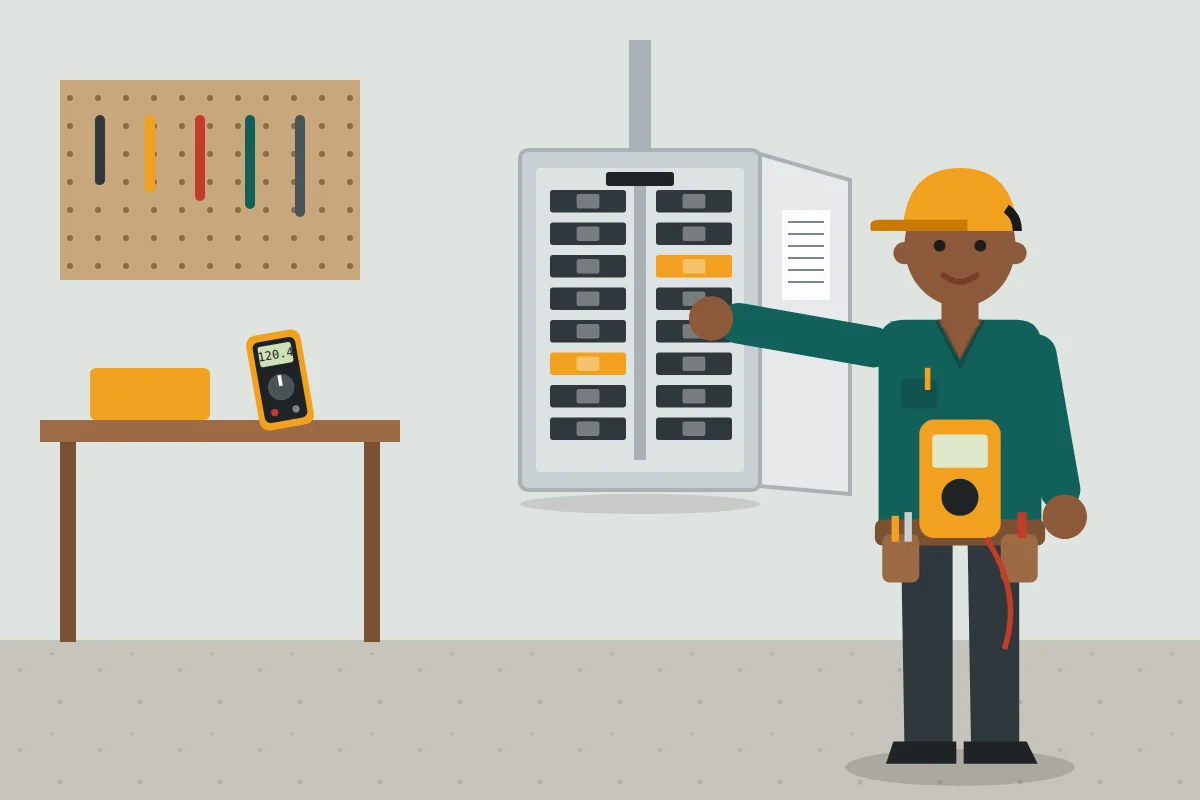
- Note the panel's main breaker size, printed on the main breaker handle.
- Count open slots and two-pole breakers from outside the panel cover.
- List current large appliances and planned additions.
- Find the panel's model label inside the door and take a photo.
What not to do
- Don't install tandem breakers or extra wires on an existing breaker to make room.
- Don't tap a new appliance into an existing outlet circuit that wasn't meant for it.
- Don't remove an unlabeled breaker to open up a slot.
- Don't let a project start before the panel question is answered.
Can you sort this out yourself?
This isn't a homeowner fix, but you control the planning. Grouping projects (say, an EV charger and a future generator inlet) lets an electrician solve the space problem once instead of twice. If you're not sure the project will happen, a home electrical consultation can map out options before you commit.
When professional help is appropriate
- You're adding a large two-pole load.
- Your panel is older, crowded or flagged in an inspection.
- You're planning a kitchen remodel, addition or finished basement.
- Breakers already trip under normal use.
What an electrician typically checks
An electrician will check the panel's listing, how many slots and which breaker types are allowed, and run a load calculation to see whether your service can support the new circuit. That calculation is what separates a slot problem from a capacity problem.
Common solutions include a subpanel near the new loads, a panel replacement with more spaces, or, when capacity is short, an electrical service upgrade. For EV charging, load management devices are sometimes an option as well, which the EV charger requirements guide explains.
Keeping it from coming back
When a panel is replaced, ask for spare spaces beyond what you need today. Planning ahead for a future EV, generator or shop saves a second round of panel work.