Older-home wiring

Why Does My Outlet Spark When I Plug Something In?

Act promptly

Short answer

A small, quick blue spark when plugging in a device that's already switched on can be normal, because current starts flowing the instant the prongs make contact. Large sparks, popping sounds, yellow or orange sparks, scorch marks, or sparks every time are not normal. They point to loose or worn contacts, damaged wiring or a fault, and the outlet should be taken out of use until it's checked.

What you may be noticing

  • A flash or pop when plugging in, sometimes with a smell.
  • Black or brown marks around the outlet slots.
  • Plugs fit loosely or fall out.
  • The outlet or cover plate feels warm.
  • The breaker trips when you plug in.

Common possible causes

  1. Normal inrush

    Plugging in something that is already on, like a vacuum or space heater, can create a tiny spark as current starts. It's brief and quiet, and it leaves no marks.

  2. Worn outlet contacts

    Older outlets lose spring tension, so plugs make poor contact and arc as they go in or move.

  3. Loose wiring connections

    A loose wire at the outlet terminals can arc and heat, especially under load.

  4. Damaged cords or plugs

    Bent prongs, split cords or damaged plugs can short as they're inserted.

  5. Moisture

    Outlets in kitchens, bathrooms, garages and outdoors can spark if water or condensation is present.

  6. Short circuit

    A fault in the appliance or wiring can produce a large spark and trip the breaker.

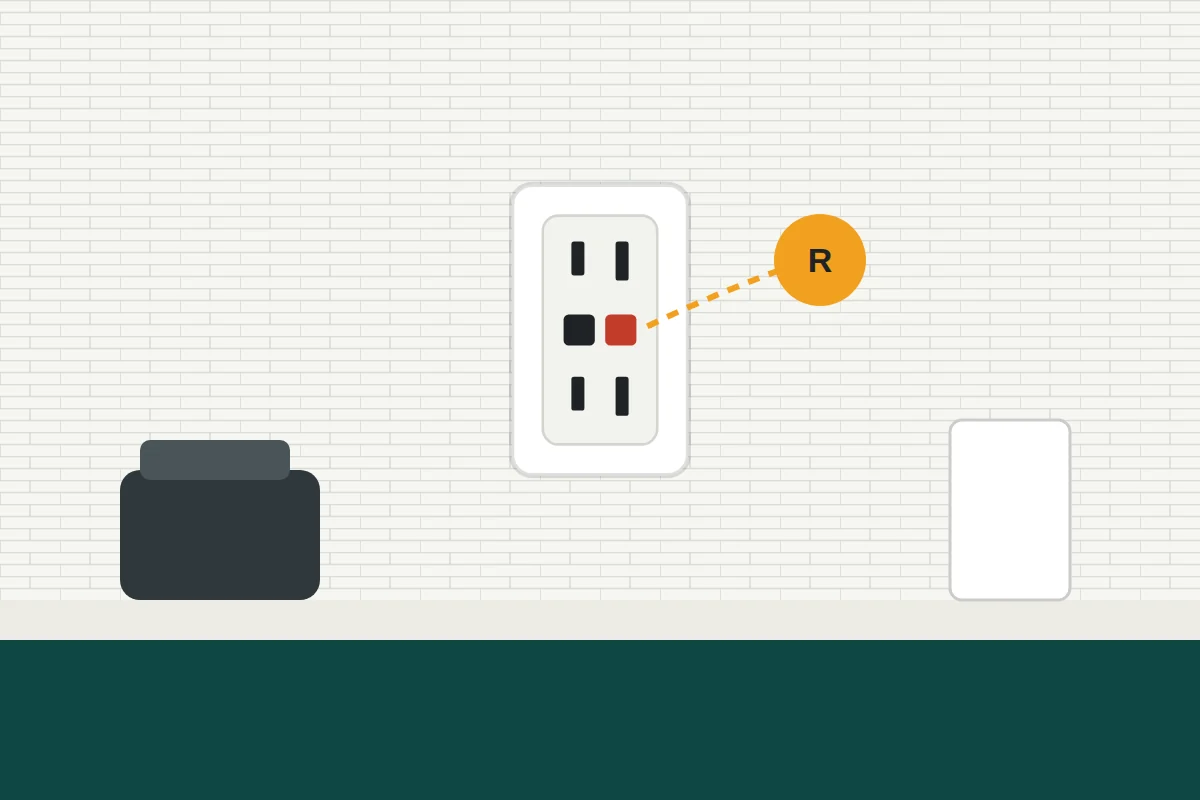
Illustration of a newly installed wall outlet beside a sofa and lamp in a living room
Illustration. People shown are not contractors listed on this site.

Safe checks you can make

  • Note the size, color and sound of the spark and whether it happens every time.
  • Check the plug and cord for damage.
  • Look for scorch marks on the outlet face or plate without removing it.
  • Try switching the device off before plugging it in.

What not to do

  • Don't keep using an outlet that sparks large, often or with marks.
  • Don't plug in damaged cords.
  • Don't remove the cover plate or outlet to look inside.
  • Don't use an outlet that is wet.

Can you sort this out yourself?

If the spark was small and happened only when plugging in a device that was switched on, turning the device off first may be all you need. If a particular cord is damaged, retire it. Large, repeated or marked sparks mean the outlet or wiring needs an electrician, and the circuit should stay off until then.

When professional help is appropriate

  • Sparks are large, loud or yellow and orange.
  • There are scorch marks or melted plastic.
  • The outlet or plate is warm.
  • Sparking happens with more than one device.
  • The breaker trips or lights flicker when plugging in.

What an electrician typically checks

An electrician will shut off power, inspect the outlet and its connections, and check the wiring for heat damage. They'll look at whether the outlet is backstabbed, loose or worn out, and whether the circuit has the right protection.

Repairs often include replacing the outlet and tightening or repairing connections, plus adding GFCI or AFCI protection where needed. If damage extends into the wiring, an electrical repair may involve replacing a section of cable.

Keeping it from coming back

Turn devices off before plugging them in, replace worn outlets that hold plugs loosely, and keep cords in good condition. In older homes, the loose outlet page covers another common issue.
Services

Services that usually resolve this

Repairs & Diagnostics

Electrical Repair

Fixing outlets, switches, fixtures and damaged wiring that have stopped working or started acting up in your Chattanooga home.

Wiring & Older Homes

GFCI & AFCI Protection

Shock protection near water and arc-fault protection for living spaces, added or corrected by a local electrician in the Chattanooga area.

Repairs & Diagnostics

Emergency Electrical Service

Guidance for urgent electrical hazards at home and a way to reach an independent local electrician when something cannot wait.

Repairs & Diagnostics

Electrical Troubleshooting

Tracking down the cause of intermittent outages, flickering, odd tripping and other electrical problems that have no obvious source.

Service areas

Help with this problem across the region

Choose your community, or call and share your address.

See every service area →

FAQ

Outlet Sparks When Plugging In: questions homeowners ask

Straight answers to the questions homeowners ask most about this topic.

Call Now

A small, quick blue spark can be normal if the device was switched on. If it's large, loud, colored yellow or orange, or leaves marks, it's not normal and needs attention.

Yes. Repeated arcing creates heat that can damage insulation and nearby materials. That's why large or frequent sparks should be treated as urgent.

If sparks are large, repeated or leave marks, turn off its breaker if you can reach the panel safely. Then avoid using that outlet until it's checked.

The appliance's cord, plug or internal parts may be damaged, or it draws a large current at start-up. Try another outlet; if it sparks there too, the appliance is likely the issue.

AFCI protection is designed to detect dangerous arcing and shut off the circuit. It doesn't fix the cause, but it can lower fire risk.

Leave it alone and check whether a breaker or GFCI tripped. If the breaker trips again on reset, keep it off and call for electrical help.

Call now

Not sure how serious it is?

Call and describe what you're seeing. You'll be connected with a local electrician who can advise on next steps.

Your call connects you with an independent local electrician who serves your area.