
Quick answer: Good garage workshop electrical planning starts with a list of the tools you use, their voltage and their power draw, then works backward to circuits, outlet placement and lighting. Most shops benefit from several dedicated 120 V circuits, at least one 240 V circuit for larger machines, plenty of GFCI-protected outlets at bench height and bright, even lighting. A detached shop may need its own subpanel fed from the house.
Many garages were wired for a door opener, a light or two and a single outlet near the door. Add a table saw, a dust collector, a compressor and a shop vacuum, and that wiring runs out of room quickly. Breakers trip, extension cords snake across the floor and tools never get the power they need.
Planning the electrical layout before you build benches and hang cabinets saves rework. This guide walks through how to think about loads, circuits, outlets, lighting and safety for an attached garage shop or a separate building out back.
Start with an honest tool list
Write down every tool you own or expect to buy in the next few years, and check each nameplate for voltage and amperage. Group them by how they are used.
- Stationary machines: table saw, jointer, planer, bandsaw, drill press, lathe.
- Motor-driven support equipment: dust collector, air compressor, air filtration.
- Handheld tools and chargers: routers, sanders, grinders, battery chargers.
- Comfort and environment: space heater, window or mini-split air conditioning, dehumidifier, refrigerator.
- Specialty gear: welders, kilns or other high-draw equipment.
Note which tools run at the same time. A dust collector and a planer often start together, which matters more than the total of everything on the list.
Circuits: how many and what kind
Shared general-purpose circuits are the usual source of nuisance trips. A workshop works better with loads spread out.
- Two or more 120 V circuits for bench outlets, alternated along the wall so neighboring outlets are on different circuits.
- A dedicated circuit for the dust collector or compressor if they run often.
- A 240 V circuit, or more than one, for larger machines that can run on higher voltage.
- A separate lighting circuit, so a tripped tool circuit does not leave you in the dark next to a spinning blade.
- Dedicated circuits for any heater or air conditioner, sized to the equipment.
If your current garage trips breakers with a few tools running, a garage without enough outlets is a common starting point for this kind of planning.
Outlet layout that fits how you work
Outlets placed at bench height, roughly a few feet apart along work walls, cut down on extension cords. Ceiling-mounted drops or cord reels can serve tools in the middle of the room. Think about where machines will sit and where infeed and outfeed space falls, so cords do not cross walkways.
Lighting for safe, accurate work
Poor light leads to mistakes and injuries. Workshops benefit from bright, evenly distributed overhead fixtures that reduce shadows across the bench and machines, plus task lighting at specific stations. LED fixtures run cool and start instantly in a cold garage, which helps in winter.
Put switches at each entry, and consider whether part of the lighting should stay on a separate circuit from the tools.

Attached garage versus detached shop
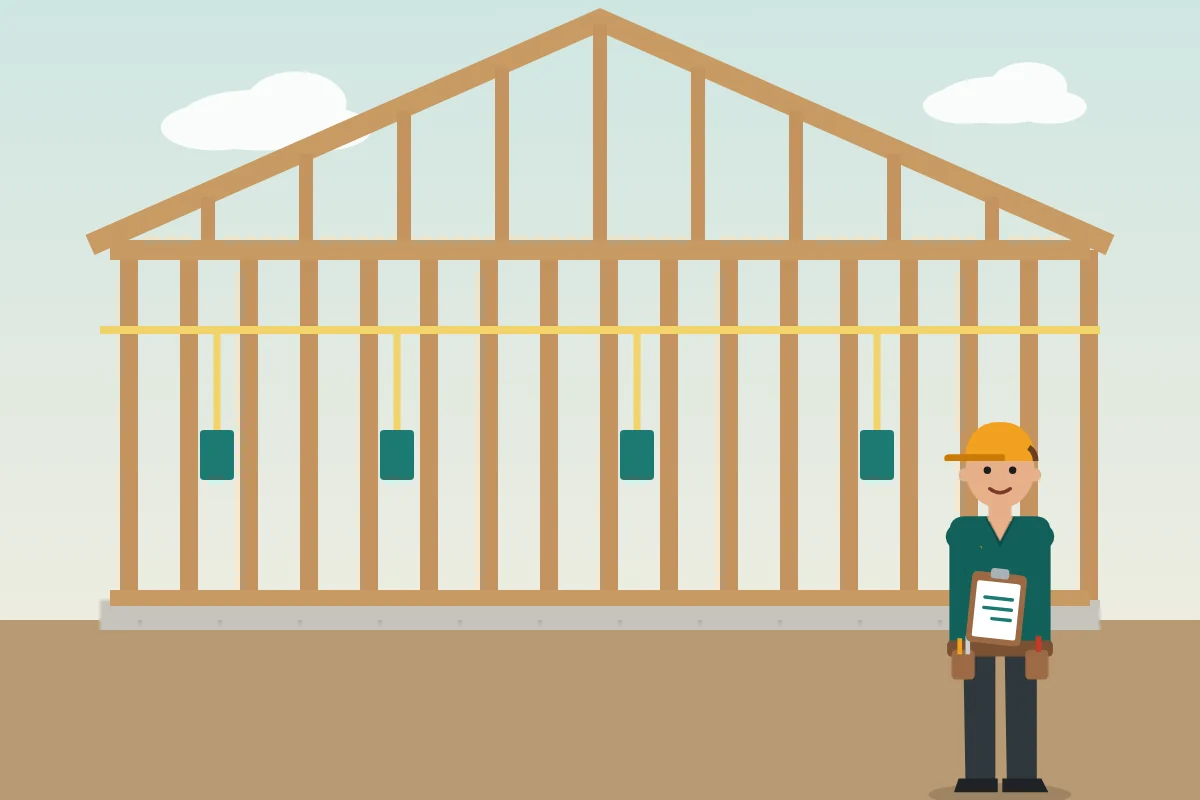
An attached garage can usually be served from the main panel if there is enough space and capacity. A detached building is a different project.
Check capacity
A load calculation shows whether the house service can support the shop's demand.
Plan the feeder
A feeder runs from the house panel to the shop, usually underground, sized for the shop's needs.
Add a subpanel
A subpanel in the shop provides local breakers and a convenient shutoff.
Ground and bond properly
Separate buildings have specific grounding and disconnect requirements under current code.
Rural homes around places like Dunlap or Ringgold often have outbuildings and longer distances to cover, which affects conductor size and trenching. Electricians who handle shed and workshop wiring plan for these runs.
Safety in a working shop
Fine sawdust, solvents and finishes, and long-running motors add risk to any electrical problem. Keep the area around the panel clear, use cords rated for the tools and do not run cords under rugs or through doorways where they can be pinched. Never open the panel or try to add a circuit yourself. If an outlet or cord feels hot, a breaker trips repeatedly or you smell burning insulation, stop and have it checked. Smoke, flame or sparking means get out and call 911. For the main garage wiring, a local electrician offering garage electrical upgrades can help put the plan into place.