
Quick answer: Rewiring an older house is worth considering when it still relies on knob-and-tube or deteriorating cloth-insulated wiring, when insulation is brittle or damaged, when much of the house is ungrounded, or when repeated problems show the system cannot safely handle modern use. A major remodel with open walls is often the most practical time. An electrician's evaluation determines whether a partial or whole-home rewire makes sense.
Rewiring sounds like a huge undertaking, and in some homes it is. But the question of when to rewire an old house is less about the age of the home and more about the condition and type of wiring behind the walls. Plenty of older homes have been rewired already. Others have wiring that is old but sound and only needs protection upgrades.
This guide walks through the clues that point toward rewiring, explains the difference between partial and whole-home rewiring, and covers what living through the work is actually like. It is written with Chattanooga's older housing in mind, including early and mid 1900s homes with plaster walls and crawlspaces.
Wiring types that often lead to a rewire
Certain wiring types prompt the rewiring conversation more than others:
- Knob-and-tube: separate hot and neutral wires run on ceramic knobs, common in homes from the early 1900s. It has no ground and was not designed to be buried in insulation.
- Early cloth or rubber-insulated cable: insulation that can become brittle and crack with age and heat.
- Ungrounded two-wire cable throughout the house, limiting safe use of modern electronics and appliances.
- Wiring with visible damage from rodents, heat, past fires or amateur modifications.
If you suspect knob-and-tube, the page on knob-and-tube wiring explains why it matters and what not to do with it.
Symptoms that suggest the wiring is failing
Wiring type tells part of the story. How the house behaves tells the rest. Repeated warm outlets or switches, frequent tripping that is not explained by an obvious overload, lights that flicker across several rooms, outlets that go dead and come back, and a burning smell with no source are all signs that connections or insulation may be breaking down.
Repair, partial rewire or whole-home rewire
Rewiring is not always all or nothing. Electricians generally weigh three approaches:
Targeted repair
Fix specific failing circuits, add GFCI and AFCI protection and ground key outlets. This fits homes with mostly sound wiring and a few problem areas.
Partial rewire
Replace wiring in the oldest or most worn sections, often the kitchen, bathrooms, laundry and any remaining knob-and-tube, while leaving sound later wiring in place.
Whole-home rewire
Replace the wiring throughout, usually with a panel upgrade. This fits homes where old wiring is widespread or the system has been modified so many times that it is hard to trust.
The right choice depends on what the electrician finds, how long you plan to stay, any upcoming remodel and what your insurer requires.
The remodel factor
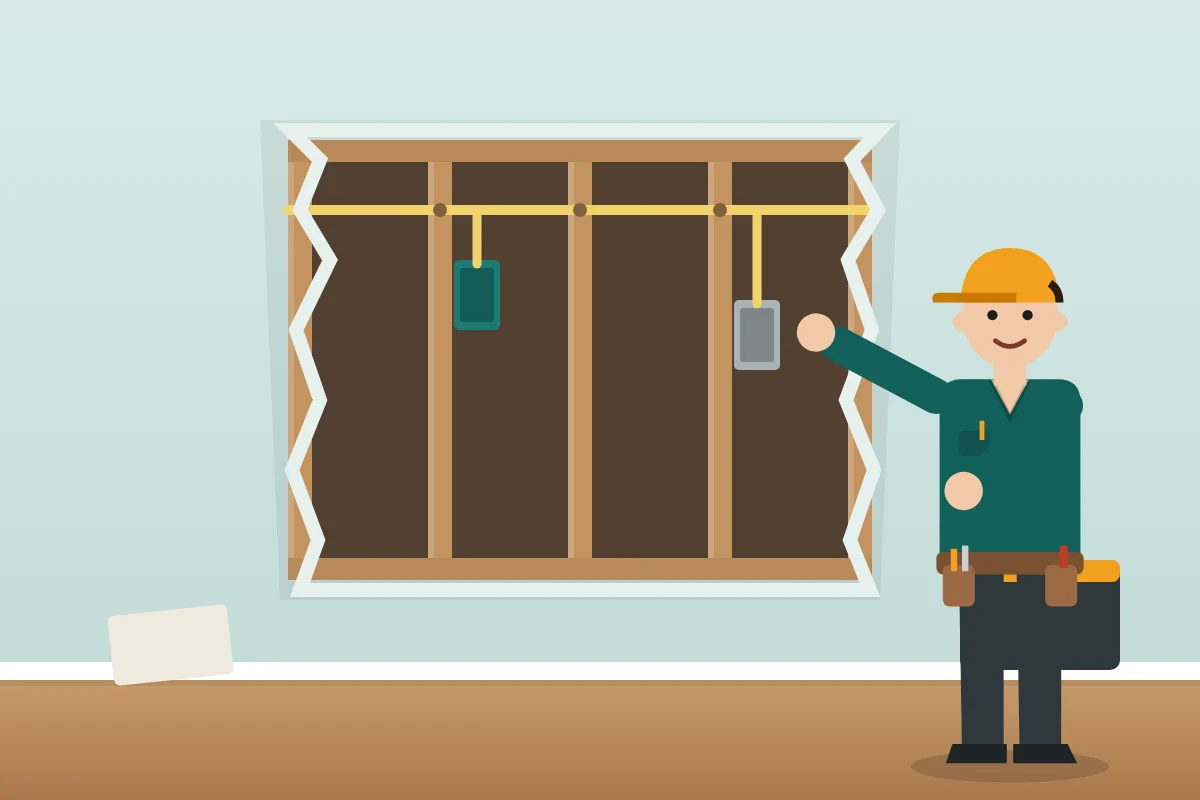
The most practical time to rewire is when walls and ceilings are already open. If you are planning a kitchen remodel, a bathroom overhaul or an addition, ask about rewiring those areas at the same time. It avoids opening finished walls twice and lets new circuits be laid out for how you will actually use the space.
Even without a remodel, an experienced electrician can often fish new wire through plaster walls with small access openings, using attics, basements and crawlspaces as pathways. Patching is part of the job and should be discussed up front.

What to expect during a rewire
A whole-home rewire usually happens in phases so the household can keep some power. Expect small openings in walls and ceilings, some dust, and periods when certain rooms are without power. A permit and inspection are typically required. Afterward, there is patching and painting, which may be handled by the electrician or a separate trade.
Cost depends on factors such as the home's size and layout, wall materials, attic and crawlspace access, how many circuits and outlets are added, whether the panel is upgraded and local permit requirements.
For a more detailed look at the process, see whole-home rewiring.
A Chattanooga perspective
Many homes in older neighborhoods such as North Shore, St. Elmo and Highland Park were wired long before central air, heat pumps and today's kitchens. Hot, humid summers keep circuits under steady load for months. Combined with older insulation, that is a reason to take recurring symptoms seriously rather than waiting for something to fail. If you are not sure where your home stands, the guide to warning signs in older homes is a good place to start.