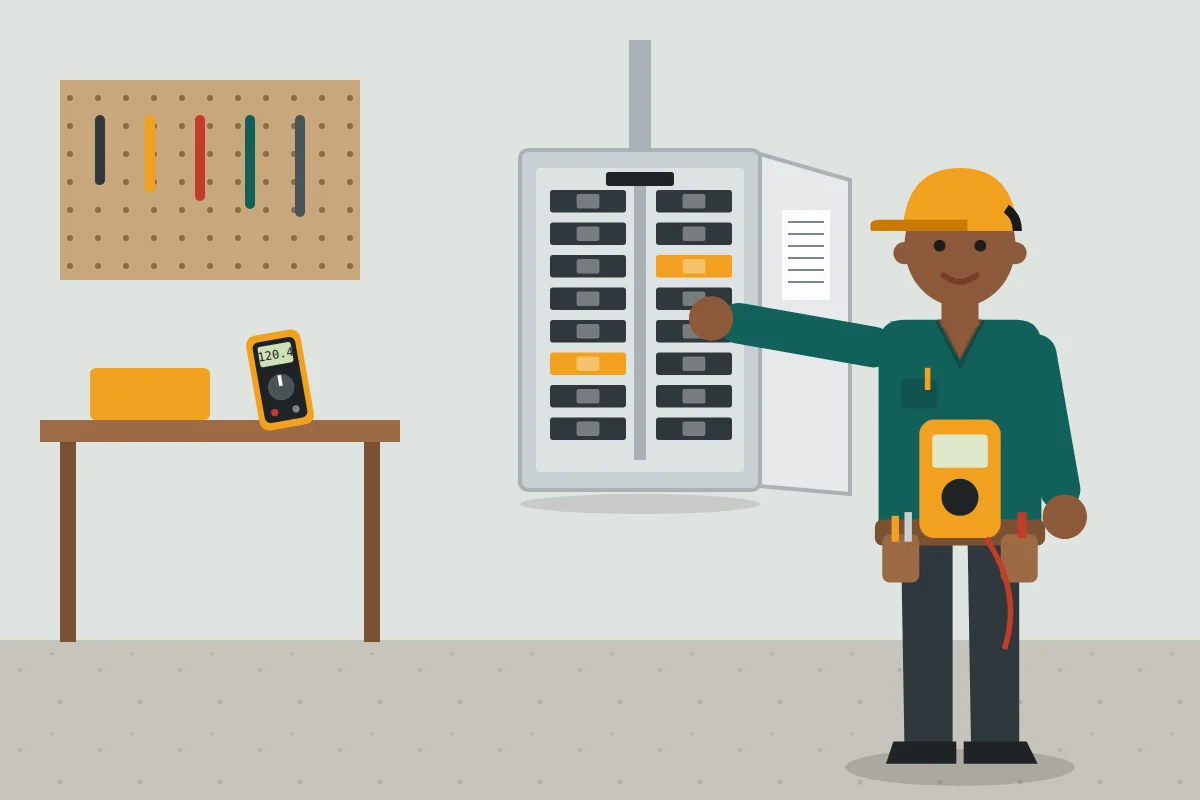
A circuit breaker electrician can tell whether the breaker is worn, the wrong type, or doing its job correctly because something on the circuit is overloaded or damaged. That difference matters, because replacing a good breaker will not fix a bad circuit.
Breaker Repair, Replacement and Additions Explained
Breakers do wear out. Repeated tripping, heat and age can weaken the internal mechanism or the clip that holds the breaker to the bus bar. Breaker replacement swaps that one device for a matching, listed breaker. Other work includes adding a breaker for a new circuit, upgrading a standard breaker to an AFCI or GFCI breaker, or correcting a breaker that is the wrong size for its wire.
If the panel is out of spaces, tandem breakers are sometimes allowed, but only where the panel is designed for them. When the panel itself is the problem, the conversation moves to panel repair or replacement.
When a Breaker Needs a Closer Look
The same breaker trips every evening when the AC, dryer and oven run together.
A breaker trips the moment you reset it.
A new appliance or space heater keeps knocking out a room.
A breaker has a burnt smell or looks discolored.
You need a new circuit and want to know if there is room for it.
Signs a Breaker May Be Failing or Mismatched
- The handle feels loose or will not latch in the on position.
- The breaker is warm to the touch when the circuit is lightly loaded.
- It trips with nothing running on the circuit.
- Lights on that circuit flicker or dim along with tripping.
- The breaker brand does not match the panel label.
What an Electrician Does With a Problem Breaker
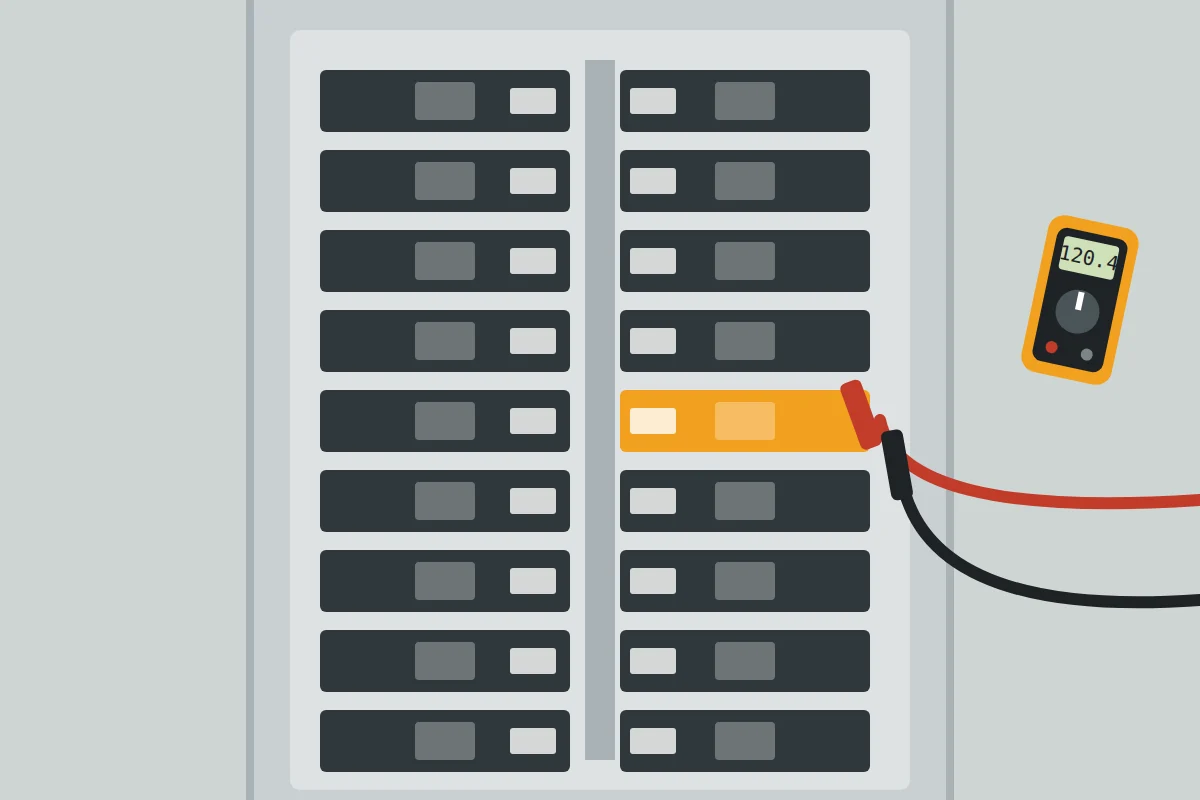
The electrician typically measures the load on the circuit, checks the breaker and its connection to the bus, and inspects the wire for heat damage. If the breaker is fine and the circuit is overloaded, the fix may be splitting the load or adding a dedicated appliance circuit.
- Breaker rating compared with wire size
- Bus bar contact and signs of arcing
- Actual load on the circuit while in use
- Compatibility of the breaker with the panel
- Shared neutrals and AFCI or GFCI behavior

How it usually works
Call with the details
Call to be connected with an independent local electrician and note which breaker trips, when, and what is running at the time.
Diagnose the circuit
The electrician tests the breaker, the load and the wiring to find out why it trips or overheats.
Replace or rebalance
A worn or wrong breaker is replaced, or the load is split or moved to a new circuit.
Verify and label
The circuit is tested under load and the panel directory is updated so the next trip is easy to trace.
For homes around Chattanooga
Long, humid Chattanooga summers mean air conditioners and heat pumps run hard for months, and older circuits that were fine in spring can start tripping by July. A breaker that trips at the same time every day is often a load pattern rather than a bad breaker; see breaker trips at the same time every day for what that can mean.