What you may be noticing
- The trip happens within the same window most days, such as early morning or late afternoon.
- It happens more on hot or cold days when heating or cooling runs harder.
- Nothing obvious is being used by anyone when it trips.
- Resetting works for the rest of the day, then it happens again the next day.
Common possible causes
HVAC or heat pump starting up
Heat pumps are common around Chattanooga, and the auxiliary heat strips on a cold morning or the compressor on a hot afternoon draw a heavy load. A failing capacitor or weak breaker can make start-up trip the circuit.
Water heater recovery
Electric water heaters work hardest after showers and laundry. A failing element can cause a ground fault or short that only shows up when the heater calls for heat.
Pumps and irrigation timers
Well pumps, sump pumps, pool pumps and irrigation controllers often run on fixed schedules. Outdoor wiring and motors exposed to moisture can develop faults.
Defrost cycles
Refrigerators, freezers and heat pumps run defrost heaters at regular intervals. A failing heater or a wet connection can trip a GFCI or breaker at roughly the same time each day.
Shared load at a predictable hour
Sometimes it's simply routine: the coffee maker, toaster and space heater all run at 6:30 on the same kitchen circuit.
Programmed lighting and electronics
Timers for outdoor lighting, holiday displays or electronics can switch on a damaged fixture or wet outdoor connection on schedule.
Safe checks you can make
- Write down the exact time of each trip for a few days, along with the weather.
- Check the panel directory to see what that breaker is labeled for, without opening the cover.
- List everything with a timer or thermostat: HVAC, water heater, pumps, irrigation, outdoor lights, freezers.
- Temporarily change one timer setting, like irrigation or outdoor lights, and see whether the trip time moves with it.
What not to do
- Don't tape, wedge or hold a breaker in the on position.
- Don't remove the panel cover to trace wires yourself.
- Don't keep resetting a breaker that serves a well pump or heat pump that is making unusual noises.
- Don't ignore a trip just because it happens at a convenient hour.
Can you sort this out yourself?
If the log shows a predictable kitchen pile-up, staggering appliances may solve it. If changing an irrigation or lighting timer moves the trip time, you've likely found the circuit, but repairing a damaged outdoor connection, a pump motor or a water heater element should go to a qualified person. HVAC equipment issues may need an HVAC technician as well as an electrician.
When professional help is appropriate
- The trip lines up with a well pump, heat pump or water heater, which are heavy, hardwired loads.
- The breaker is warm to the touch or makes a buzzing sound.
- A GFCI on an outdoor or garage circuit trips on schedule, especially after rain.
- You've ruled out overload and the trips continue.
- Trips are getting more frequent over time.
What an electrician typically checks
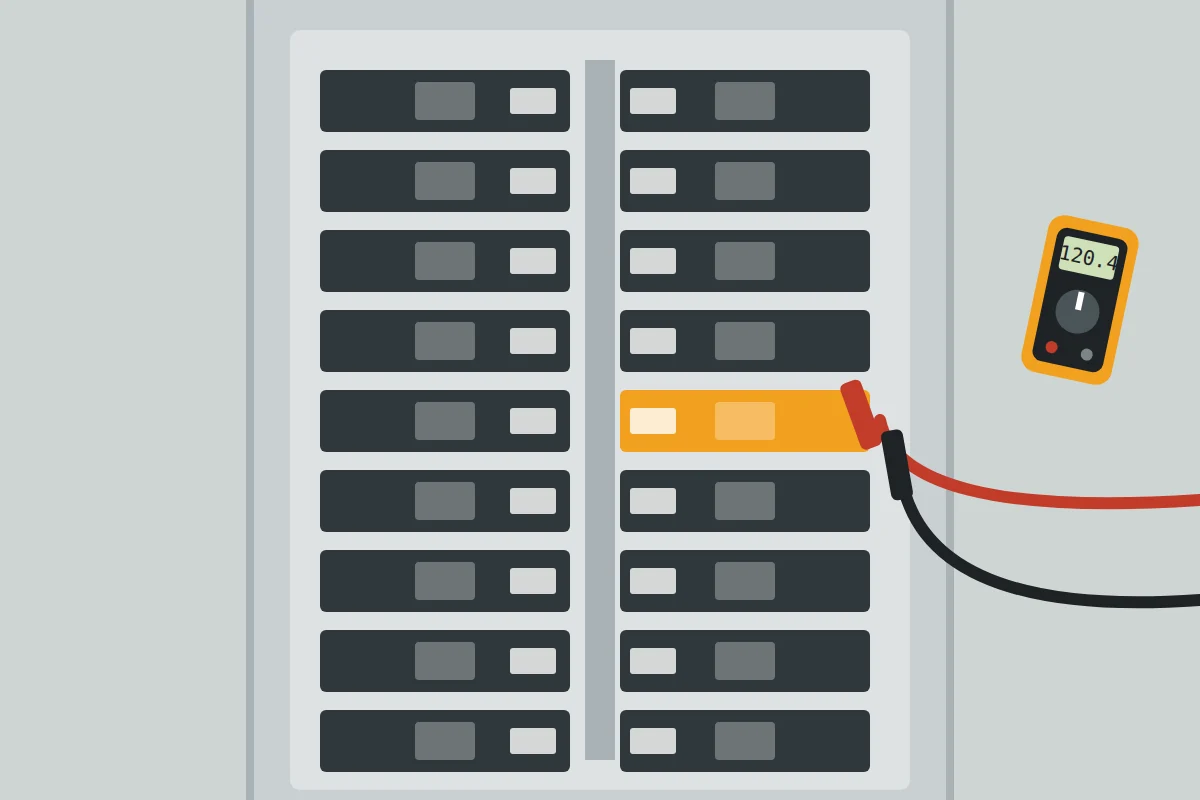
An electrician can measure current on the circuit during the cycle that trips it, test the breaker, and check insulation resistance on motor and heater circuits. Clamp meter readings taken at the right moment often explain what a daily log only hints at.
Repairs range from tightening a connection or replacing a worn breaker to repairing outdoor wiring or separating loads. If the trip is on a GFCI outdoors, the rain-related GFCI page covers that side of it.
Keeping it from coming back
Keep a simple record of when trips happen and what was running. Seasonal electrical maintenance that includes checking outdoor connections and heavy appliance circuits can catch wear before it becomes a daily nuisance.