What you may be noticing
- The breaker trips the moment the fan or its light is switched on
- The fan runs for a while, then the breaker trips
- Only the light kit or only the fan motor trips the breaker
- The fan hums, smells hot or wobbles before the trip
- The trouble began after the fan was installed, moved or cleaned
Common possible causes
Pinched or nicked wire in the canopy
During installation, wires are often squeezed into the canopy. A wire pinched by the bracket or a mounting screw can short against metal and trip the breaker.
Failing motor or capacitor
Fan motors and capacitors can fail with age and heat, drawing excess current or shorting internally.
Light kit short
A damaged socket or loose light kit connection can cause a fault that trips the breaker only when the light is on.
Loose connection at the ceiling box
Loose wire nuts or connections can arc, especially when fan vibration works them looser over time.
Arc-fault breaker detecting a problem
AFCI breakers respond to arcing patterns. Some older fan motors can trigger them, but often they are catching a real loose connection.
Moisture in an outdoor or porch fan
Fans on porches need a damp or wet rating. Water in a fan not rated for it can cause faults.
Safe checks you can make
- Note whether the trip happens with the fan, the light or both
- Check whether the breaker is a standard, GFCI or AFCI type by its test button
- Listen and smell for humming or hot odors before the trip
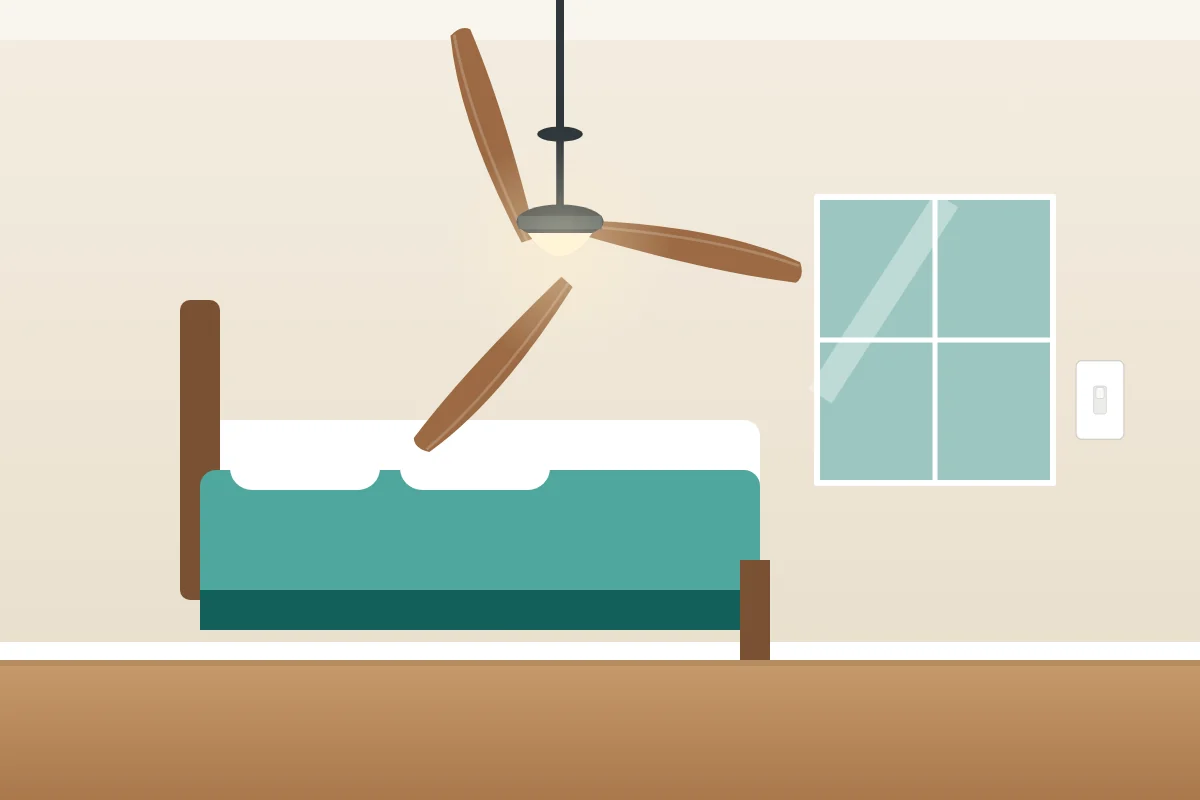
- Look for a wobble or loose blades from the floor
What not to do
- Do not keep resetting the breaker after it trips more than once
- Do not lower the fan canopy to look at wires
- Do not replace the breaker with a larger one
- Do not run the fan from the pull chain only to avoid the switch
Can you sort this out yourself?
Resetting the breaker once is fine. If it trips again right away, leave it off. If it only trips when the light kit is on, try a different bulb, since a shorted bulb or loose socket sometimes causes the problem. Beyond that, almost every cause is in the canopy, motor or box, and inspecting those means dropping the fan and handling conductors. That part should go to an electrician, especially if the fan was recently installed.
When professional help is appropriate
- The breaker trips again after a single reset
- The trip happens as soon as the fan or light is turned on
- The fan was recently installed or moved
- You notice a hot smell, humming or scorch marks
- An AFCI breaker trips repeatedly on that circuit
What an electrician typically checks
An electrician will lower the fan, inspect the conductors in the canopy and box for pinches or nicks, and test the motor and light kit separately to isolate the fault. They also confirm the box is rated for fan support, since a heavy fan on a light-duty box can loosen wires over time.
Repairs may include re-routing or replacing damaged conductors, tightening connections, replacing a failed capacitor or light kit, or recommending a new fan when the motor is the problem. Careful ceiling fan installation solves most repeat issues. If an arc-fault breaker is involved, breaker testing can help sort out a genuine fault from a nuisance trip.
Keeping it from coming back
Use a fan-rated box and the correct mounting hardware, and keep canopy wiring neat so nothing gets pinched. Choose damp-rated or wet-rated fans for porches, which matters in humid Chattanooga summers.