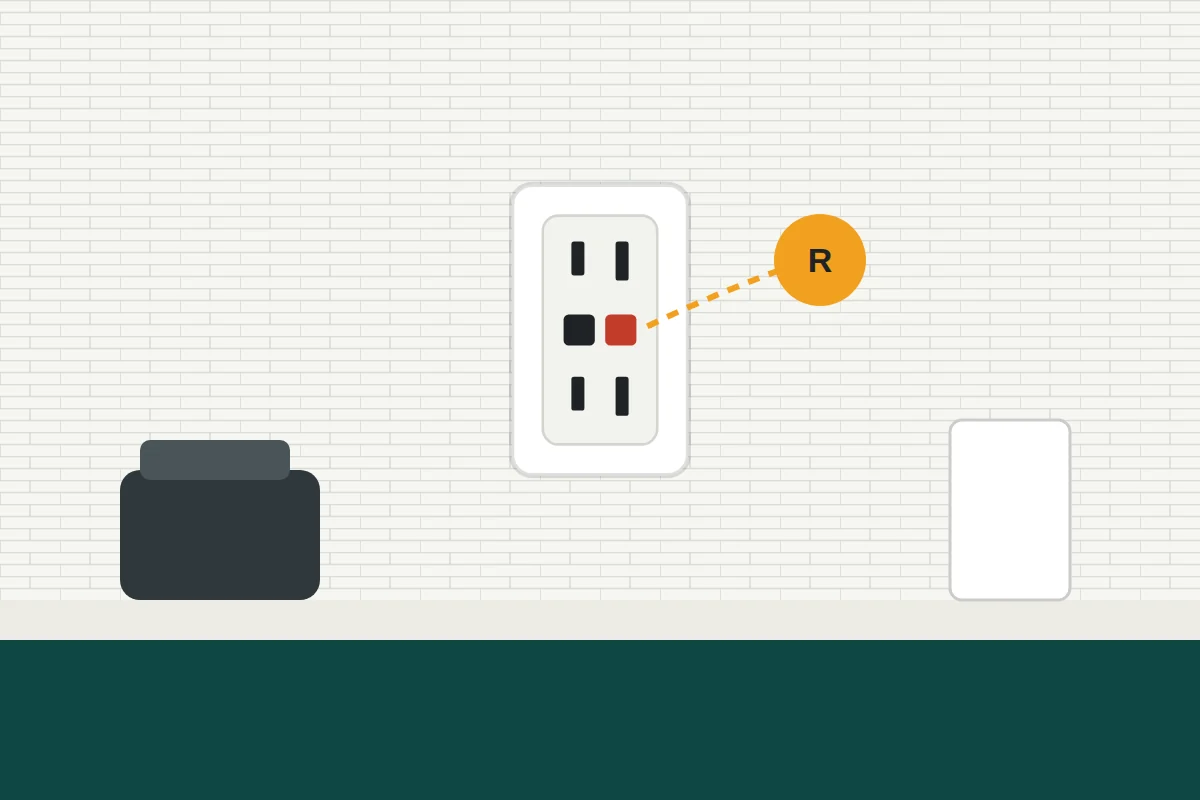
Exterior work faces conditions indoor wiring never sees, so parts need to be rated for wet locations, buried cable needs proper depth or conduit, and outdoor outlets and circuits generally need GFCI protection. A call connects Chattanooga-area homeowners with an independent local electrician to plan it.
Line-Voltage Fixtures vs. Low-Voltage Landscape Lighting
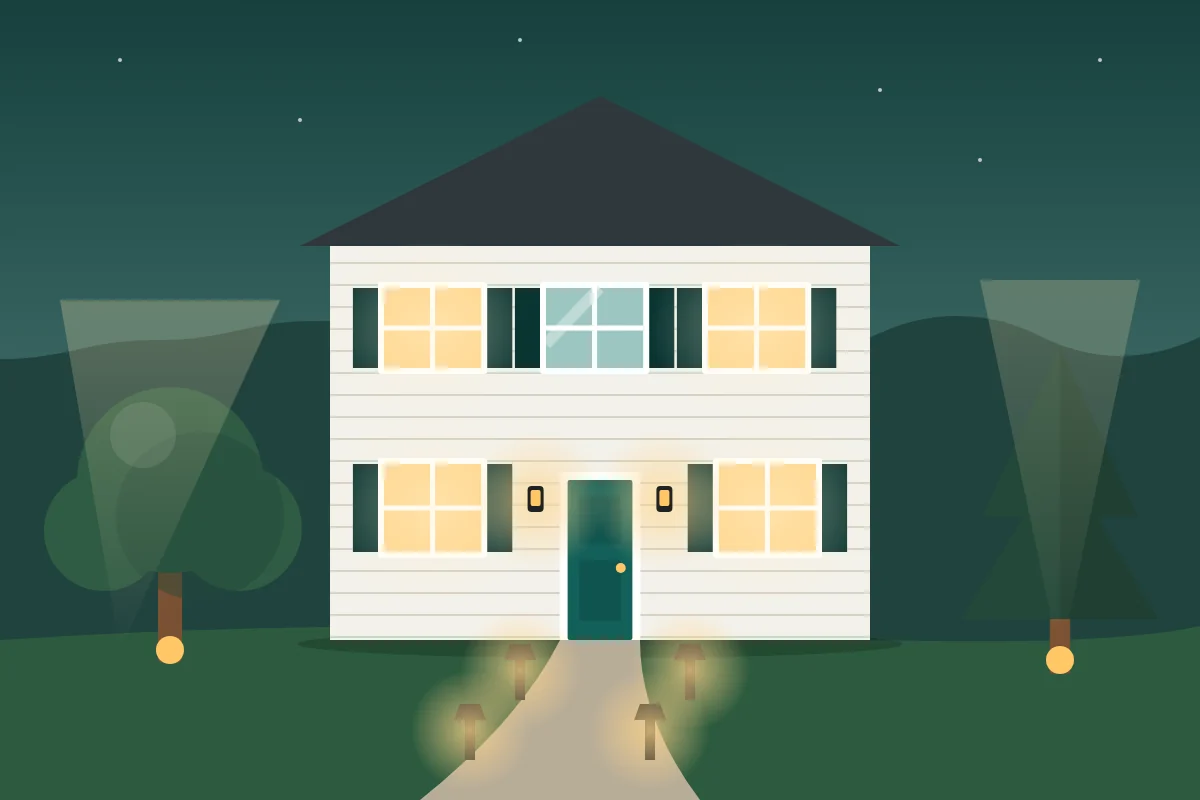
Most exterior lighting falls into two groups. Line-voltage fixtures, such as wall lanterns, soffit lights and security floods, run on standard household voltage and are wired like any other circuit, using weatherproof boxes and covers. Low-voltage landscape lighting uses a transformer connected to a GFCI-protected outdoor source, which then sends lower voltage through cable to path and accent lights.
Controls matter as much as fixtures. Photocells turn lights on at dusk, motion sensors save security lights for when someone is actually there, and timers or smart switches handle the rest. If you also need receptacles or power for a pump, fountain or detached building, those fall under outdoor power circuits and can be planned at the same time.
Common Outdoor Lighting Projects
Replacing a single dim porch light with brighter, better-placed entry lighting
Adding motion-sensing floodlights over a driveway, side yard or back door
Lighting deck stairs, patio steps or a long front walkway
Installing landscape lighting to highlight trees, beds and the front of the house
Putting a light on a detached garage, shed or gate that has none
Signs Your Exterior Lighting Is Not Doing Its Job
- Guests stumble on dark steps or a sloped walk at night
- A security light stays on all day or never triggers at all
- Exterior fixtures fill with water, rust or bugs after a few seasons
- An outdoor GFCI trips whenever it rains
- Extension cords run across the yard for patio or holiday lights
Planning an Exterior Lighting Job
The electrician walks the property to see what is dark, where power can come from and how cable can reach each location without crossing driveways or tree roots unnecessarily.
- Wet-location ratings on fixtures, boxes and covers
- GFCI protection for outdoor circuits and receptacles
- Burial depth or conduit for underground cable runs
- Sensor placement and aim so lights trigger where needed
- Transformer sizing and placement for low-voltage systems
- Glare and light direction toward neighboring homes
How it usually works
Call and describe the property
Share which areas are dark, what you want lit and any existing outdoor power. You will be connected with an independent local electrician.
Walk the yard and plan
The electrician notes fixture locations, power sources, cable routes and controls such as photocells, timers or motion sensors.
Install wiring and fixtures
Weather-rated boxes, fixtures and cable go in, with trenching or conduit for underground runs and inspection where required.
Set controls and test after dark
Sensors and timers are adjusted, GFCI protection is tested and the lighting is checked for coverage and glare.
For homes around Chattanooga
Chattanooga's hillside lots, long driveways and mature trees create deep shadows, and sloped walks and steps are where outdoor lighting earns its keep. Spring and fall storms bring heavy rain and wind, so fixtures, gaskets and buried connections need to hold up to a soaking. On lake properties near Soddy-Daisy, dock and shoreline lighting brings its own wet-location requirements and is worth planning carefully.