
Generators, EV & Smart Home

Home Theater and Media Room Wiring in Chattanooga

Home theater wiring covers the electrical side of a media room or living room entertainment setup: the circuits that power screens, receivers and subwoofers, the outlets hidden behind a wall-mounted TV, the pathways that carry speaker and video cables, and the surge protection that guards expensive equipment.

Your call connects you with an independent local electrician who serves your area.

Illustration of a living room media wall with a mounted TV, speakers and accent lighting

It is most useful when you are finishing a basement, converting a bonus room or mounting a large screen and want clean walls without cords hanging below the set.

Power, Pathways and Protection for a Media Room

Power comes first. A projector, large amplifier, gaming console and powered subwoofer can add up, and sharing a circuit with a space heater or vacuum leads to nuisance trips and noise. Many media rooms benefit from a dedicated circuit for the equipment wall, plus separate circuits for general outlets and lighting.

Low-voltage pathways are the second piece. Instead of pulling cables loose through the wall, an electrician can install conduit or open pathways from the equipment rack to the screen and speaker locations. That makes it possible to change cables later without cutting drywall. Recessed outlet boxes behind the screen keep plugs flush so the TV sits tight to the wall.

Situations Where Media Wiring Makes Sense

  1. You are finishing a basement or attic room as a theater space.

  2. A new wall-mounted TV needs a recessed power outlet behind it.

  3. Equipment shares a circuit with other rooms and trips the breaker.

  4. You want in-wall or in-ceiling speakers with pathways for future changes.

  5. You plan dimmable theater lighting with scene controls.

Signs the Current Setup Is Not Keeping Up

  • Power strips are chained together behind the entertainment center.
  • Audio hums or buzzes when other appliances run.
  • The breaker trips when the subwoofer and a room heater run together.
  • Cords hang below a wall-mounted screen with no clean way to hide them.
  • Equipment has been damaged after a nearby lightning strike.

Planning the Electrical Layout

Good media wiring starts with a layout: where the screen, rack, speakers and seating go. From there the electrician sizes circuits, places recessed boxes and plans pathways. In-wall cord kits sold for TVs are not the same as properly installed power, and running a regular power cord inside a wall is not allowed.

  • Available circuit capacity for the equipment wall
  • Recessed power and low-voltage boxes behind the screen
  • Conduit or pathway routes between rack, screen and speakers
  • Separation of power and low-voltage cables
  • Point-of-use and whole-home surge protection
  • Lighting circuits and dimmer compatibility
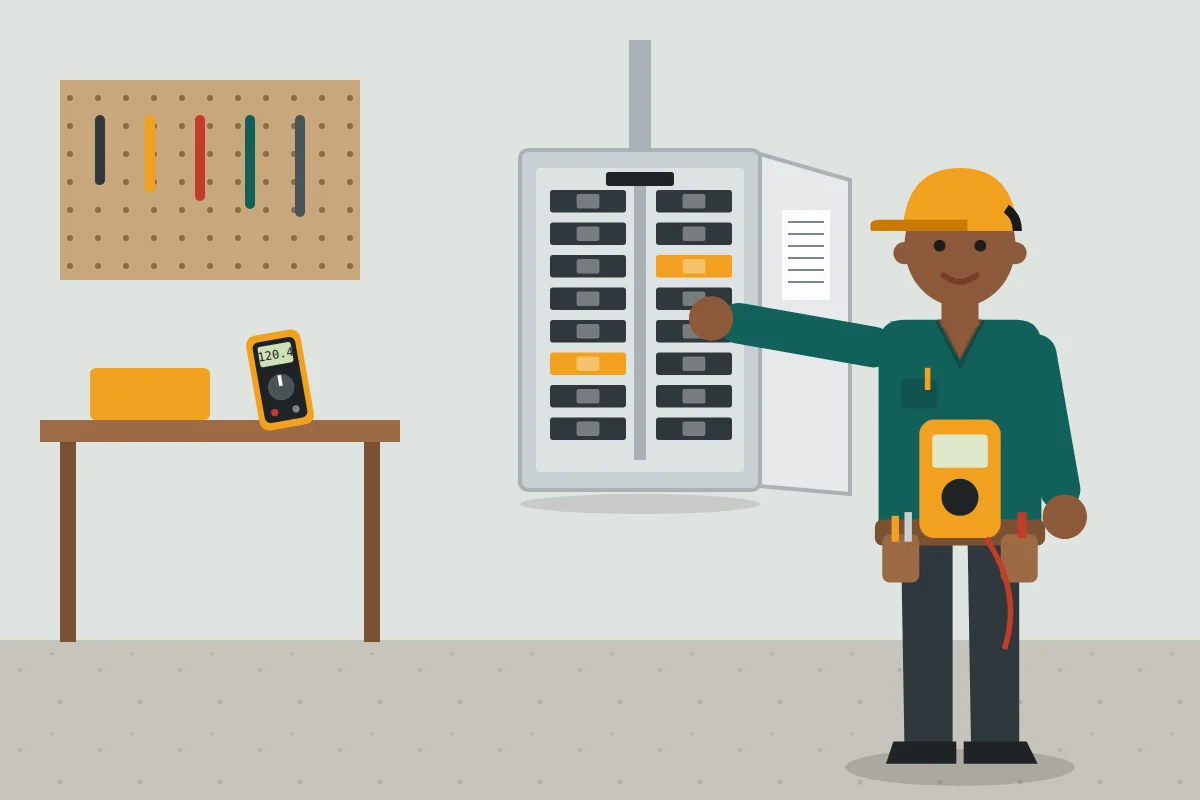
Illustration of an electrician testing an open residential breaker panel in a garage
Illustration. People shown are not contractors listed on this site.

How it usually works

  1. Call to talk through the room

    Explain the screen size, equipment and room plans. The call connects you with an independent local electrician.

  2. Layout and load planning

    The electrician marks circuit needs, recessed box locations and cable pathway routes with you.

  3. Rough-in and installation

    Circuits, boxes, conduit and surge protection are installed, ideally while walls are open.

  4. Final testing

    Outlets, dimmers and protection devices are tested so the room is ready for equipment.

For homes around Chattanooga

Spring and summer storms around Chattanooga bring frequent lightning, and a media room full of electronics is exactly what surge protection is meant to guard. Many homeowners build theaters in finished basements, so it helps to pair this work with basement electrical planning and confirm moisture-prone areas have proper GFCI protection.

Related problems

Problems that often lead to home theater & media wiring

  • Breaker Trips at the Same Time Every Day

    A breaker that trips on a schedule usually points to something on a timer or cycle, such as HVAC, a well pump, irrigation or a water heater.

    Get it checked soon
  • New Room Has No Electrical Outlets

    Bonus rooms, converted garages and finished spaces often end up with few or no outlets. Here's how to plan adding them the right way.

    Usually not an emergency
  • Dimmer Switch Gets Hot

    Dimmers run warm by design, but a dimmer that gets hot often means too much load, the wrong bulbs or dimmers ganged too tightly.

    Get it checked soon

Related services

Often planned alongside home theater & media wiring

Panels, Breakers & Service

Surge Protection

A surge protective device at the panel, paired with plug-in protection, to help shield appliances and electronics from voltage spikes.

Generators, EV & Smart Home

Smart Home Wiring

Smart switches and controls often need a neutral wire, deeper boxes and clean circuits, which many older homes do not have yet.

Lighting & Controls

Lighting Controls & Dimmers

Dimmers, three-way switches, timers, occupancy sensors and smart controls matched to the lights they actually run.

Remodels, Additions & New Builds

Basement & Attic Electrical

Lighting, outlets and safer wiring for basements and attics, from finishing a lower level to sorting out old attic splices.

Service areas

Home Theater & Media Wiring around Chattanooga

Homeowners from Soddy-Daisy to Ringgold call about home theater & media wiring. Calls go to participating independent electricians; pick your community for local context.

See every service area →

FAQ

Home Theater & Media Wiring: common questions

Straight answers to the questions homeowners ask most about this topic.

Call Now

Not every setup needs one, but a dedicated circuit for the equipment wall helps when you run a large amplifier, projector or powered subwoofer. It also keeps vacuums and space heaters from causing trips or audio noise.

It is a power box set deeper into the wall so the plug sits flush and the screen can mount tight. It is installed as a real outlet on a circuit, unlike cord kits that only pass a cord through the wall.

Conduit or an open pathway lets you pull new video, speaker or network cables later without opening drywall. Formats change every few years, so a pathway saves a lot of patching down the road.

They can share a cavity when separated properly, but they should not run in the same box or be bundled tightly. Separation reduces interference and keeps low-voltage wiring isolated from line voltage.

A quality strip helps at the point of use, but it cannot stop large surges coming in on the service. Many homeowners combine strips with a panel-mounted device. The surge protection guide explains how the layers work together.

Yes. Open studs make it simple to add circuits, recessed boxes and conduit. Existing finished rooms can still be wired, but expect small openings and more labor to route cables cleanly.

Call now

Ready to talk about home theater & media wiring?

One call connects you with a local electrician who can look at your home and explain your options.

Your call connects you with an independent local electrician who serves your area.